

Actualités
Comment prévenir les bosses d'épaule sur les vêtements : Le guide complet des cintres

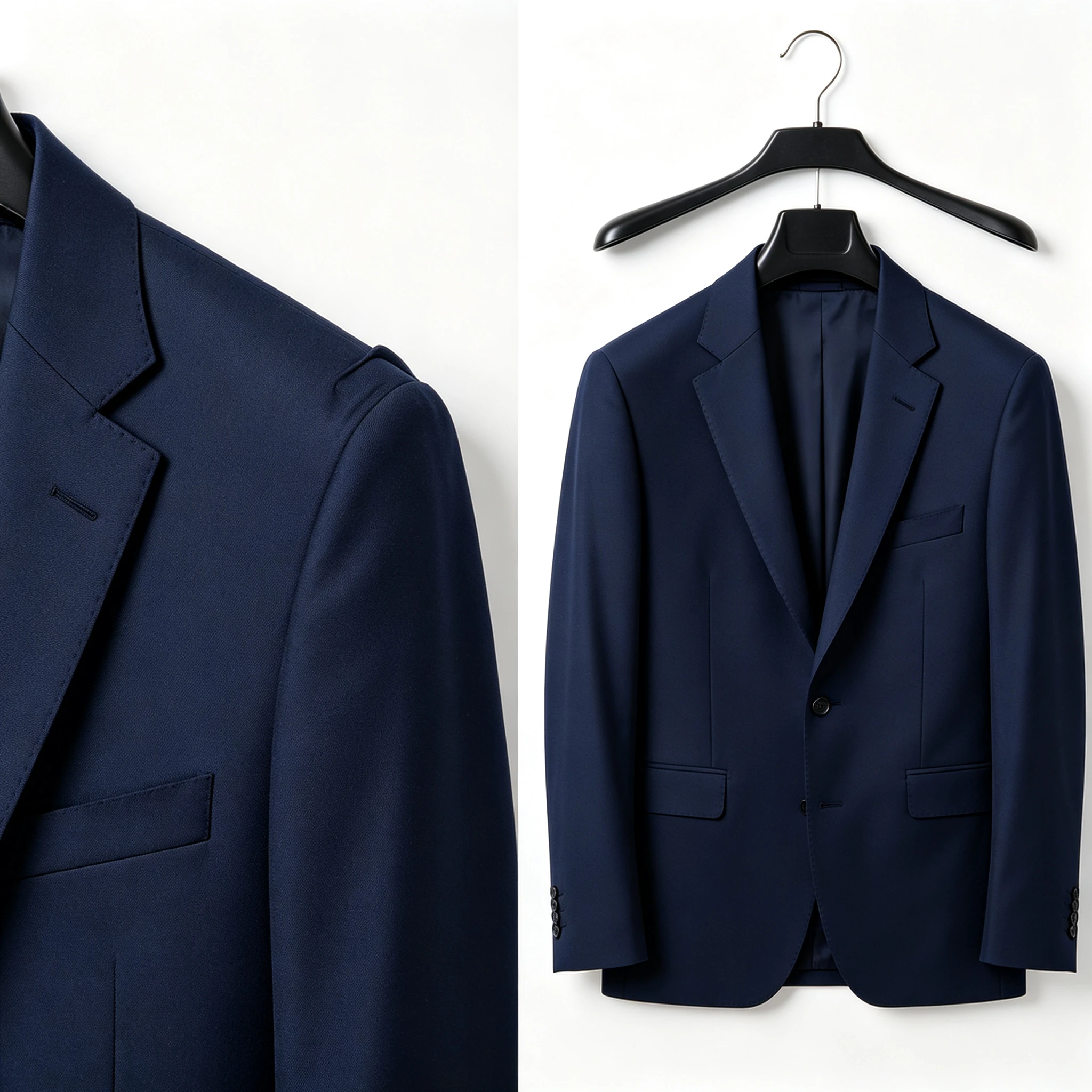
Vous retirez votre veste préférée du portant, prête à la porter — et là, elles sont : deux bosses pointues et acérées aux épaules, juste là où le cintre a creusé le tissu. On les appelle bosses d'épaules (également connues sous le nom de cornes de cintre, tétons de cintre ou marques de cintre), et elles constituent l'une des formes de dommages vestimentaires les plus courantes — et les plus évitables. Un costume à 500 € peut être ruiné par un cintre en fil de fer à 0,50 €. Dans ce guide complet, nous expliquons exactement ce qui cause les bosses d'épaules, comment les prévenir avec les bons cintres, et quoi faire si vos vêtements en ont déjà. Pour un aperçu plus large des types de cintres, consultez notre guide complet des types de cintres.
Que sont les bosses d'épaules (cornes de cintre) ?
Les bosses d'épaules sont des protubérances pointues d'apparence permanente qui se forment aux coutures d'épaules des vestes, manteaux, blazers et tricots après avoir été suspendus trop longtemps sur un cintre inadapté. Elles se produisent lorsque l'épaule du cintre est trop étroite, trop pointue ou de taille incorrecte, créant un point de pression concentré sur la couture d'épaule du vêtement plutôt que de répartir le poids uniformément sur la courbe naturelle de l'épaule. Avec le temps, le tissu, la doublure et le rembourrage de cette zone se compriment et se déforment, prenant la forme du bord étroit du cintre.
Les bosses d'épaules sont les plus courantes sur :
- Costumes structurés et blazers (avec épaulettes et doublure en toile)
- Manteaux lourds et manteaux en laine (le poids amplifie le point de pression)
- Tricots et pulls (les tissus doux s'étirent et se déforment facilement)
- Vestes en cuir et similicuir (le matériau se plisse de façon permanente aux points de pression)
- Vêtements de cérémonie pour enfants (les petits vêtements sont particulièrement vulnérables aux cintres trop grands)
Qu'est-ce qui cause les bosses d'épaules ? (3 principaux coupables)
1. Épaules de cintre étroites ou pointues (la cause n°1)
La principale cause des bosses aux épaules est un cintre dont les épaules sont trop étroites – moins de 3 cm de large. Les cintres fins en fil de fer, les cintres en plastique bon marché des pressings et les cintres métalliques fins ont tous des épaules étroites et pointues qui concentrent tout le poids du vêtement sur une petite zone au niveau de la couture d'épaule. Au lieu que l'épaule du cintre épouse la forme naturelle de l'épaule du vêtement, le vêtement est forcé d'épouser la pointe étroite du cintre – créant une bosse permanente. C'est pourquoi les bosses apparaissent exactement à la couture d'épaule, et non ailleurs.
2. Taille de cintre incorrecte (trop petite ou trop grande)
Un cintre de mauvaise taille pour le vêtement provoque des bosses aux épaules, même s'il a des épaules larges. Un cintre trop petit (par exemple, un cintre de taille enfant sous un costume d'homme) n'atteint pas la couture d'épaule du vêtement, de sorte que le tissu drape sur le bord du cintre et crée une bosse à la couture. Un cintre trop grand (par exemple, un cintre pour adulte sous une veste d'enfant) dépasse l'épaule, étirant le tissu et créant une distorsion. La longueur du cintre doit correspondre à la largeur d'épaule à épaule du vêtement.
3. Suspendre des vêtements lourds ou mouillés sur des cintres fragiles
Les vêtements lourds (manteaux en laine, vestes en cuir, gilets tactiques lestés) amplifient les défauts de tout cintre – même un cintre modérément large peut se plier ou créer des points de pression sous un poids de 3 à 5 kg. Vêtements mouillés sont encore plus vulnérables : le tissu mouillé est plus doux, plus lourd et plus susceptible de s'étirer et de se déformer. Suspendre un costume ou un pull mouillé sur un cintre étroit garantit presque des bosses aux épaules, car le poids de l'eau tire le tissu vers le bas autour du bord du cintre. Laissez toujours sécher les vêtements à plat ou sur une forme rembourrée avant de les suspendre.
Comment prévenir les bosses d'épaules : 5 méthodes éprouvées
✅ Méthode 1 : Utiliser des cintres profilés à larges épaules (le plus important)
La prévention la plus efficace consiste à utiliser des cintres avec un épaule large et profilée d'au moins 4cm (idéalement 4,2–6,2cm pour les costumes et manteaux pour adultes). L'épaule large imite la forme naturelle de l'épaule humaine, répartissant le poids du vêtement uniformément sur toute la zone de l'épaule plutôt que de le concentrer en un seul point. La forme profilée (courbée) suit la ligne d'épaule du vêtement, éliminant le bord tranchant qui crée des bosses. Notre cintre pour costume masculin à épaules de 44,5 cm (épaule de 4,2cm, 85g de qualité commerciale) est conçue spécifiquement pour prévenir les bosses d'épaule sur les costumes et manteaux. Pour les pardessus lourds, optez pour un modèle à épaule extra-large de 6,2cm pour un soutien maximal.
✅ Méthode 2 : Adapter la taille du cintre à la taille du vêtement
Utilisez toujours un cintre dont la longueur correspond à la largeur d'épaule du vêtement. Utilisez ce guide de taille : costumes/manteaux pour hommes adultes = longueur de 44 à 45,5cm ; costumes/manteaux pour femmes adultes = 39 à 40cm ; enfants plus âgés (6–12 ans) = 36cm ; jeunes enfants (1–5 ans) = 28–30.5cm. Using the correct size ensures the hanger’s shoulder ends exactly at the garment’s shoulder seam, with no overhang or gap. Our 36cm big kids coat hanger (4cm wide shoulder) is perfectly sized for older children’s jackets and suits, preventing the bumps that occur when adult hangers are used on kids’ clothing.
✅ Méthode 3 : Choisir le bon matériau pour le type de vêtement
Different garments need different hanger materials. For structured suits and coats, use commercial-grade plastic (ABS/HIPS) wide-shoulder hangers — they’re rigid, durable, and hold their shape under heavy weight. For knitwear and sweaters, use padded or velvet hangers with wide shoulders — the soft surface prevents snags and the padding distributes weight gently. For delicate blouses and dresses, velvet flocked hangers provide non-slip grip without sharp edges. For leather jackets, use extra-wide shoulder plastic hangers (5cm+) to support the heavy material and prevent creasing. For a detailed comparison, read our guide to guide velours vs cintres en plastique.
✅ Méthode 4 : Ne jamais suspendre de vêtements mouillés ou humides
Wet fabric is up to 3x more prone to stretching and deformation than dry fabric. Never hang a wet suit, coat, or sweater on any hanger — the water weight will pull the fabric down around the hanger’s shoulder edge, creating bumps that are extremely difficult to remove. Instead: (1) gently squeeze out excess water (never wring or twist); (2) lay the garment flat on a clean, dry towel; (3) roll it up in the towel to absorb moisture; (4) reshape it by hand; (5) allow it to air-dry flat or on a padded drying form until completely dry; (6) only then transfer it to a wide-shoulder hanger for storage. This simple habit prevents the majority of shoulder bumps on knitwear and delicate garments.
✅ Méthode 5 : Ranger correctement les vêtements lourds (ne pas surcharger)
Even the best wide-shoulder hanger can fail if the garment is crammed into an overcrowded closet. When garments are packed tightly together, they press against each other, and the hanger’s shoulder can be pushed out of alignment — creating pressure points and bumps. Follow these storage rules: (1) leave at least 2–3cm of space between each hanging garment; (2) don’t hang multiple garments on a single hanger; (3) for off-season storage, consider using breathable garment bags with built-in shoulder supports; (4) rotate heavy coats between wide-shoulder hangers periodically to allow the shoulder padding to recover; (5) for very heavy items (tactical vests, fur coats, weighted gear), use a heavy-duty hanger with 50kg+ load capacity rather than a standard suit hanger. For more on suit and coat hanger selection, read our guide to the meilleurs cintres pour costumes et manteaux.
Vous avez déjà des bosses d'épaules ? Voici comment les réparer
If your garments already have shoulder bumps, don’t panic — many can be reduced or removed, depending on the fabric and severity. Try these methods, from gentlest to most aggressive:
- Steam treatment (best for suits, coats, and structured garments): Hang the garment on a proper wide-shoulder hanger. Use a handheld garment steamer or the steam function on your iron to thoroughly steam the shoulder area, holding the steamer 2–3cm away from the fabric. While the fabric is still warm and damp, gently massage and reshape the shoulder by hand, smoothing out the bump. Allow it to cool completely on the hanger before touching. Repeat 2–3 times if needed. The steam relaxes the fabric fibers and lining, allowing them to return to their natural shape.
- Hang-damp method (best for knitwear and cotton): Lightly mist the shoulder area with water from a spray bottle (don’t soak it). Immediately hang the garment on a wide-shoulder hanger that’s the correct size. Gently reshape the shoulder by hand, smoothing out the bump. Allow it to air-dry completely on the hanger. As the fabric dries, it will set in the corrected shape. This works well for sweaters, cotton jackets, and knit blazers.
- Press with a tailor’s ham (best for severe bumps): For stubborn bumps on structured garments, use a tailor’s ham (a tightly stuffed, curved pressing cushion) placed inside the garment’s shoulder. Press the shoulder area with a warm iron (use a pressing cloth to protect the fabric) over the ham — the curved shape of the ham supports the shoulder and helps reshape it. This is the most effective method for severe bumps but requires some skill to avoid damaging the fabric.
- Professional pressing (last resort): If home methods don’t work, take the garment to a professional dry cleaner or tailor. They have industrial steamers, pressing equipment, and the expertise to reshape even severely deformed shoulders. This is especially recommended for expensive suits, coats, and leather jackets — the cost of professional pressing is far less than replacing the garment.
- Prevention is always better: Once you’ve removed the bumps, immediately transfer the garment to a proper wide-shoulder, correctly sized hanger to prevent them from returning. The best fix for shoulder bumps is never getting them in the first place.
Recommandations de cintres par type de vêtement
| Type de vêtement | Recommended Hanger | Largeur d'épaule | Why |
|---|---|---|---|
| Men’s Suits & Blazers | Wide-shoulder plastic (ABS/HIPS) | 4,2–6,2 cm | Rigid support for padded shoulders, high load capacity |
| Women’s Suits & Blazers | Wide-shoulder velvet or plastic | 4–4.5cm | Non-slip grip + wide support for structured shoulders |
| Heavy Overcoats & Wool Coats | Extra-wide shoulder heavy-duty plastic | 5–6.2cm | Maximum weight distribution for 3–5kg garments |
| Knitwear & Sweaters | Padded or wide-shoulder velvet | 4cm+ | cURL Too many subrequests by single Worker invocation. To configure this limit, refer to https://developers.cloudflare.com/workers/wrangler/configuration/#limits |
| cURL Too many subrequests by single Worker invocation. To configure this limit, refer to https://developers.cloudflare.com/workers/wrangler/configuration/#limits | cURL Too many subrequests by single Worker invocation. To configure this limit, refer to https://developers.cloudflare.com/workers/wrangler/configuration/#limits | cURL Too many subrequests by single Worker invocation. To configure this limit, refer to https://developers.cloudflare.com/workers/wrangler/configuration/#limits | cURL Too many subrequests by single Worker invocation. To configure this limit, refer to https://developers.cloudflare.com/workers/wrangler/configuration/#limits |
| cURL Too many subrequests by single Worker invocation. To configure this limit, refer to https://developers.cloudflare.com/workers/wrangler/configuration/#limits | cURL Too many subrequests by single Worker invocation. To configure this limit, refer to https://developers.cloudflare.com/workers/wrangler/configuration/#limits | cURL Too many subrequests by single Worker invocation. To configure this limit, refer to https://developers.cloudflare.com/workers/wrangler/configuration/#limits | cURL Too many subrequests by single Worker invocation. To configure this limit, refer to https://developers.cloudflare.com/workers/wrangler/configuration/#limits |
| Shirts & Blouses | Standard plastic or velvet | 3–4cm | Lightweight garments need less support; non-slip helps |
Questions fréquemment posées
Q: Can shoulder bumps be permanent?
A: Shoulder bumps can become permanent if left untreated for a long time, especially on structured garments with shoulder padding and canvas lining. The padding and lining can compress and take a permanent set, making the bump difficult to remove without professional re-pressing. However, most shoulder bumps on wool, cotton, and knit garments can be significantly reduced or removed with steam treatment, hang-damp reshaping, or professional pressing. The key is to address them early — the longer a garment hangs on the wrong hanger, the more permanent the deformation becomes. Prevention (using the right hanger) is always far easier and more effective than fixing bumps after they’ve formed.
Q: How wide should a hanger shoulder be to prevent bumps?
A: For adult suits and coats, the hanger shoulder should be at least 4cm wide, ideally 4.2–6.2cm depending on the garment weight. A 4.2cm shoulder is sufficient for standard suits and blazers, while a 5–6.2cm extra-wide shoulder is recommended for heavy overcoats, leather jackets, and structured winter wear. For women’s suits and blazers, 4–4.5cm is appropriate. For children’s clothing, 2.5–4cm depending on age (2.5–3cm for toddlers, 3.5–4cm for older children). Any shoulder under 3cm risks causing bumps on structured garments, regardless of hanger material. The shoulder should also be contoured (curved), not flat or pointy, to follow the garment’s natural shoulder shape.
Q: Are velvet hangers good for preventing shoulder bumps?
A: Standard velvet hangers are not ideal for preventing shoulder bumps on suits and coats because most have a narrow, flat shoulder (under 3cm) that can create pressure points — despite their excellent non-slip grip. However, wide-shoulder velvet hangers (4cm+ shoulder) are excellent for preventing bumps on suits, blazers, and coats — they combine the non-slip benefit and soft surface of velvet with the shoulder support of a wide hanger. For knitwear and sweaters, even standard velvet hangers work well because the soft, fuzzy surface distributes weight gently and prevents the sharp edges that cause bumps on delicate knits. For heavy overcoats, we recommend wide-shoulder plastic or wooden hangers rather than velvet, as they offer greater load capacity and rigidity. For a detailed comparison, read our velvet vs plastic hangers guide.
Q: Can I use a hanger that’s slightly too big or too small?
A: A hanger that’s slightly too big (within 2–3cm of the garment’s shoulder width) is generally acceptable for most garments — it may cause minor stretching at the armhole but is unlikely to create sharp shoulder bumps. However, a hanger that’s too small (more than 3cm narrower than the garment) is a major cause of shoulder bumps — the hanger’s shoulder ends before the garment’s shoulder seam, creating a sharp pressure point exactly at the seam. For children’s clothing, using an adult hanger (10cm+ too wide) can cause significant stretching and distortion. The general rule: if the hanger’s shoulder doesn’t reach the garment’s shoulder seam, it’s too small — upgrade to the correct size immediately. When in doubt, choose a hanger that’s slightly too wide rather than too narrow.
Q: How do I know if my current hangers are causing bumps?
A: Do this quick inspection: (1) Take a suit jacket or coat off the hanger and lay it flat on a bed or table. (2) Look at the shoulder areas — are there pointy protrusions, indentations, or creases at the shoulder seams? (3) Run your hand along the shoulder — does the fabric feel compressed or deformed in a small area? (4) Check the hanger itself — is the shoulder under 3cm wide? Is it flat or pointy rather than contoured? Is the hanger significantly shorter than the garment’s shoulder width? If you answer “yes” to any of these, your hangers are likely causing or will cause shoulder bumps. The solution is simple: replace them with wide-shoulder (4cm+), contoured, correctly sized hangers. For suits and coats, explore our wide-shoulder plastic hangers collection — all designed with shoulder support and bump prevention in mind.
Arrêtez de ruiner vos vêtements — Mettez à niveau vos cintres dès aujourd'hui
Shoulder bumps are 100% preventable with the right hangers. Our wide-shoulder, contoured commercial-grade hangers are designed to support suits, coats, and knitwear properly — eliminating shoulder bumps forever. Factory-direct wholesale pricing, custom colors and logos, free samples, and global shipping.
Shop Wide-Shoulder Hangers
Acheter des cintres en velours
Obtenez un devis gratuit
Pour un aperçu complet de tous les types de cintres, matériaux et utilisations, lisez notre Types de cintres : le guide complet.