

Notizie
Come prevenire le gobbe sulle spalle dei vestiti: la guida completa alle grucce

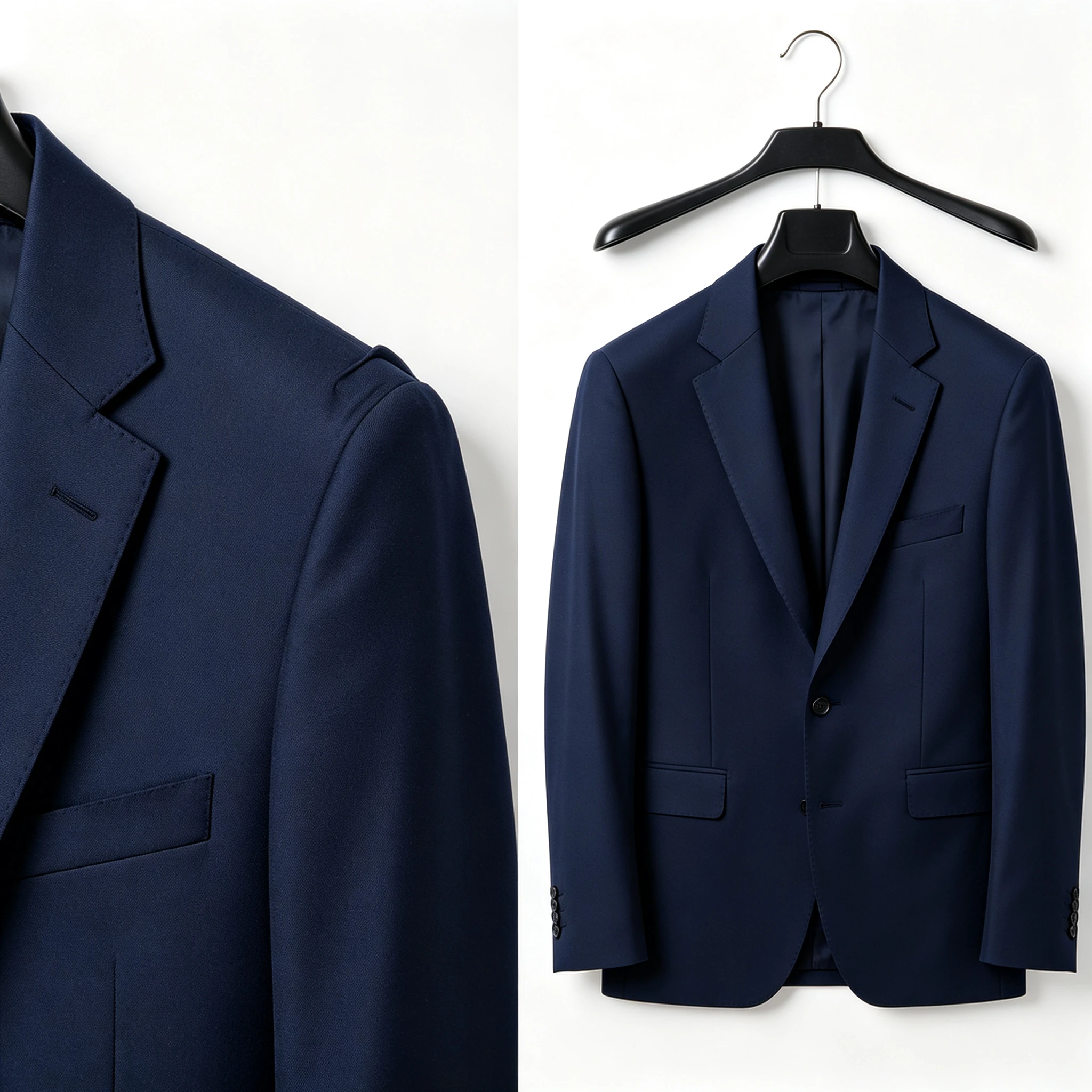
Tafferai la tua giacca preferita dal gancio, pronta da indossare — e eccole: due sporgenze appuntite e nette sulle spalle, proprio dove il gancio si è conficcato nel tessuto. Si chiamano sporgenze sulle spalle (noto anche come corna del gancio, capezzoli del gancio o segni del gancio), e sono una delle forme più comuni — e più prevenibili — di danno ai vestiti. Un completo $500 può essere rovinato da un appendiabiti di filo $0.50. In questa guida completa, spieghiamo esattamente cosa causa le sporgenze sulle spalle, come prevenirle con i ganci giusti e cosa fare se i tuoi vestiti le hanno già. Per una panoramica più ampia sui tipi di ganci, consulta la nostra guida completa a tipi di grucce per vestiti.
Cosa Sono le Sporgenze sulle Spalle (Corna del Gancio)?
Le sporgenze sulle spalle sono protuberanze appuntite dall’aspetto permanente che si formano alle cuciture delle spalle di giacche, cappotti, blazer e maglieria dopo averli appesi a lungo sul gancio sbagliato. Si verificano quando la spalla del gancio è troppo stretta, troppo appuntita o di dimensioni sbagliate — creando un punto di pressione concentrato sulla cucitura della spalla del capo invece di distribuire il peso uniformemente lungo la curva naturale della spalla. Col tempo, il tessuto, la fodera e il padding in quella zona si comprimono e deformano, assumendo la forma del bordo stretto del gancio.
Le sporgenze sulle spalle sono più comuni su:
- Abiti e blazer strutturati (con spalline imbottite e fodera in canvas)
- Cappotti pesanti e cappotti in lana (il peso amplifica il punto di pressione)
- Maglieria e maglioni (tessuti morbidi che si allungano e deformano facilmente)
- Giubbotti in pelle e ecopelle (il materiale si crepa permanentemente nei punti di pressione)
- Abbigliamento formale per bambini (i piccoli capi sono particolarmente vulnerabili a grucce troppo grandi)
Cosa Causa le Sporgenze sulle Spalle? (3 principali colpevoli)
1. Spalle del gancio strette o appuntite (La causa #1)
La causa principale delle sporgenze sulle spalle è una gruccia con spalle troppo strette — meno di 3cm di larghezza. Le grucce sottili in filo, le grucce di plastica economiche per lavanderia e le grucce in metallo sottile hanno tutte spalle strette e appuntite che concentrano tutto il peso del capo su una piccola area della cucitura della spalla. Invece di adattarsi alla forma naturale della spalla del capo, la gruccia costringe il capo a conformarsi alla punta stretta della gruccia — creando una sporgenza permanente. Per questo motivo, le sporgenze appaiono esattamente sulla cucitura della spalla, non altrove.
2. Gancio di dimensioni sbagliate (troppo piccolo o troppo grande)
Una gruccia di dimensioni sbagliate per il capo causa sporgenze sulla spalla anche se ha spalle larghe. Una gruccia troppo piccola (ad esempio, una gruccia per bambini sotto un abito da uomo) non raggiunge la cucitura della spalla del capo, quindi il tessuto si drappeggia oltre il bordo della gruccia e crea una sporgenza sulla cucitura. Una gruccia troppo grande (ad esempio, una gruccia da adulto sotto una giacca da bambino) si estende oltre la spalla, allungando il tessuto e creando distorsioni. La lunghezza della gruccia deve corrispondere alla larghezza spalla-spalla del capo.
3. Appendere capi pesanti o umidi su ganci deboli
I capi pesanti (cappotti in lana, giubbotti in pelle, gilet tattici con peso) amplificano le carenze di qualsiasi gruccia — anche una gruccia moderatamente larga può piegarsi o creare punti di pressione sotto 3–5kg di peso. I capi bagnati sono ancora più vulnerabili: il tessuto bagnato è più morbido, più pesante e più soggetto a allungarsi e deformarsi. Appendere un costume bagnato o un maglione su una gruccia stretta garantisce quasi sicuramente sporgenze sulla spalla, poiché il peso dell’acqua tira il tessuto intorno al bordo della gruccia. Lasciare sempre i capi ad asciugare in piano o su una forma imbottita prima di appenderli.
Come Prevenire le Sporgenze sulle Spalle: 5 Metodi Collaudati
✅ Metodo 1: Usa ganci con spalle larghe e sagomate (Più Importante)
La prevenzione più efficace è l'uso di appendini con una spalla larga e sagomata di almeno 4cm (idealmente 4,2–6,2cm per abiti e cappotti da adulto). La spalla larga imita la forma naturale della spalla umana, distribuendo il peso del capo in modo uniforme su tutta l'area della spalla anziché concentrarlo in un punto singolo. La forma sagomata (curvata) segue la linea della spalla del capo, eliminando il bordo acuto che crea rigonfiamenti. Il nostro appendino da uomo con spalle larghe di 44,5cm (spalla da 4,2cm, 85g di qualità commerciale) è progettato specificamente per prevenire rigonfiamenti sulla spalla di abiti e cappotti. Per cappotti pesanti, passare a un modello con spalla extra-larga da 6,2cm per il massimo supporto.
✅ Metodo 2: Abbina la dimensione del gancio a quella del capo
Usa sempre un appendino la cui lunghezza corrisponde alla larghezza della spalla del capo. Usa questa guida alle misure: abiti/cappotti da uomo adulto = lunghezza 44–45,5cm; abiti/cappotti da donna adulta = 39–40cm; bambini più grandi (6–12 anni) = 36cm; bambini piccoli (1–5 anni) = 28–30.5cm. Using the correct size ensures the hanger’s shoulder ends exactly at the garment’s shoulder seam, with no overhang or gap. Our 36cm big kids coat hanger (4cm wide shoulder) is perfectly sized for older children’s jackets and suits, preventing the bumps that occur when adult hangers are used on kids’ clothing.
✅ Metodo 3: Scegli il materiale giusto per il tipo di capo
Different garments need different hanger materials. For structured suits and coats, use commercial-grade plastic (ABS/HIPS) wide-shoulder hangers — they’re rigid, durable, and hold their shape under heavy weight. For knitwear and sweaters, use padded or velvet hangers with wide shoulders — the soft surface prevents snags and the padding distributes weight gently. For delicate blouses and dresses, velvet flocked hangers provide non-slip grip without sharp edges. For leather jackets, use extra-wide shoulder plastic hangers (5cm+) to support the heavy material and prevent creasing. For a detailed comparison, read our guide to appendini in velluto vs plastica.
✅ Metodo 4: Non appendere mai capi umidi o bagnati
Wet fabric is up to 3x more prone to stretching and deformation than dry fabric. Never hang a wet suit, coat, or sweater on any hanger — the water weight will pull the fabric down around the hanger’s shoulder edge, creating bumps that are extremely difficult to remove. Instead: (1) gently squeeze out excess water (never wring or twist); (2) lay the garment flat on a clean, dry towel; (3) roll it up in the towel to absorb moisture; (4) reshape it by hand; (5) allow it to air-dry flat or on a padded drying form until completely dry; (6) only then transfer it to a wide-shoulder hanger for storage. This simple habit prevents the majority of shoulder bumps on knitwear and delicate garments.
✅ Metodo 5: Conserva correttamente i capi pesanti (evita di sovraffollare)
Even the best wide-shoulder hanger can fail if the garment is crammed into an overcrowded closet. When garments are packed tightly together, they press against each other, and the hanger’s shoulder can be pushed out of alignment — creating pressure points and bumps. Follow these storage rules: (1) leave at least 2–3cm of space between each hanging garment; (2) don’t hang multiple garments on a single hanger; (3) for off-season storage, consider using breathable garment bags with built-in shoulder supports; (4) rotate heavy coats between wide-shoulder hangers periodically to allow the shoulder padding to recover; (5) for very heavy items (tactical vests, fur coats, weighted gear), use a heavy-duty hanger with 50kg+ load capacity rather than a standard suit hanger. For more on suit and coat hanger selection, read our guide to the migliori grucce per abiti e cappotti.
Hai già le sporgenze sulle spalle? Ecco come sistemarle
If your garments already have shoulder bumps, don’t panic — many can be reduced or removed, depending on the fabric and severity. Try these methods, from gentlest to most aggressive:
- Steam treatment (best for suits, coats, and structured garments): Hang the garment on a proper wide-shoulder hanger. Use a handheld garment steamer or the steam function on your iron to thoroughly steam the shoulder area, holding the steamer 2–3cm away from the fabric. While the fabric is still warm and damp, gently massage and reshape the shoulder by hand, smoothing out the bump. Allow it to cool completely on the hanger before touching. Repeat 2–3 times if needed. The steam relaxes the fabric fibers and lining, allowing them to return to their natural shape.
- Hang-damp method (best for knitwear and cotton): Lightly mist the shoulder area with water from a spray bottle (don’t soak it). Immediately hang the garment on a wide-shoulder hanger that’s the correct size. Gently reshape the shoulder by hand, smoothing out the bump. Allow it to air-dry completely on the hanger. As the fabric dries, it will set in the corrected shape. This works well for sweaters, cotton jackets, and knit blazers.
- Press with a tailor’s ham (best for severe bumps): For stubborn bumps on structured garments, use a tailor’s ham (a tightly stuffed, curved pressing cushion) placed inside the garment’s shoulder. Press the shoulder area with a warm iron (use a pressing cloth to protect the fabric) over the ham — the curved shape of the ham supports the shoulder and helps reshape it. This is the most effective method for severe bumps but requires some skill to avoid damaging the fabric.
- Professional pressing (last resort): If home methods don’t work, take the garment to a professional dry cleaner or tailor. They have industrial steamers, pressing equipment, and the expertise to reshape even severely deformed shoulders. This is especially recommended for expensive suits, coats, and leather jackets — the cost of professional pressing is far less than replacing the garment.
- Prevention is always better: Once you’ve removed the bumps, immediately transfer the garment to a proper wide-shoulder, correctly sized hanger to prevent them from returning. The best fix for shoulder bumps is never getting them in the first place.
Consigli sui ganci in base al tipo di capo
| Tipo di capo | Recommended Hanger | Larghezza Spalla | Why |
|---|---|---|---|
| Men’s Suits & Blazers | Wide-shoulder plastic (ABS/HIPS) | da 4,2 a 6,2cm | Rigid support for padded shoulders, high load capacity |
| Women’s Suits & Blazers | Wide-shoulder velvet or plastic | 4–4.5cm | Non-slip grip + wide support for structured shoulders |
| Heavy Overcoats & Wool Coats | Extra-wide shoulder heavy-duty plastic | 5–6.2cm | Maximum weight distribution for 3–5kg garments |
| Knitwear & Sweaters | Padded or wide-shoulder velvet | 4cm+ | Soft surface prevents snags; wide support prevents stretching |
| Leather & Faux-Leather Jackets | Extra-wide shoulder plastic (5cm+) | 5cm+ | Heavy material needs maximum support to prevent creasing |
| Children’s Suits & Coats | Correct-size wide-shoulder plastic | 2.5–4cm (by age) | Correct size prevents bumps from oversized hangers |
| Shirts & Blouses | Standard plastic or velvet | 3–4cm | Lightweight garments need less support; non-slip helps |
Domande frequenti
Q: Can shoulder bumps be permanent?
A: Shoulder bumps can become permanent if left untreated for a long time, especially on structured garments with shoulder padding and canvas lining. The padding and lining can compress and take a permanent set, making the bump difficult to remove without professional re-pressing. However, most shoulder bumps on wool, cotton, and knit garments can be significantly reduced or removed with steam treatment, hang-damp reshaping, or professional pressing. The key is to address them early — the longer a garment hangs on the wrong hanger, the more permanent the deformation becomes. Prevention (using the right hanger) is always far easier and more effective than fixing bumps after they’ve formed.
Q: How wide should a hanger shoulder be to prevent bumps?
A: For adult suits and coats, the hanger shoulder should be at least 4cm wide, ideally 4.2–6.2cm depending on the garment weight. A 4.2cm shoulder is sufficient for standard suits and blazers, while a 5–6.2cm extra-wide shoulder is recommended for heavy overcoats, leather jackets, and structured winter wear. For women’s suits and blazers, 4–4.5cm is appropriate. For children’s clothing, 2.5–4cm depending on age (2.5–3cm for toddlers, 3.5–4cm for older children). Any shoulder under 3cm risks causing bumps on structured garments, regardless of hanger material. The shoulder should also be contoured (curved), not flat or pointy, to follow the garment’s natural shoulder shape.
Q: Are velvet hangers good for preventing shoulder bumps?
A: Standard velvet hangers are not ideal for preventing shoulder bumps on suits and coats because most have a narrow, flat shoulder (under 3cm) that can create pressure points — despite their excellent non-slip grip. However, wide-shoulder velvet hangers (4cm+ shoulder) are excellent for preventing bumps on suits, blazers, and coats — they combine the non-slip benefit and soft surface of velvet with the shoulder support of a wide hanger. For knitwear and sweaters, even standard velvet hangers work well because the soft, fuzzy surface distributes weight gently and prevents the sharp edges that cause bumps on delicate knits. For heavy overcoats, we recommend wide-shoulder plastic or wooden hangers rather than velvet, as they offer greater load capacity and rigidity. For a detailed comparison, read our velvet vs plastic hangers guide.
Q: Can I use a hanger that’s slightly too big or too small?
A: A hanger that’s slightly too big (within 2–3cm of the garment’s shoulder width) is generally acceptable for most garments — it may cause minor stretching at the armhole but is unlikely to create sharp shoulder bumps. However, a hanger that’s too small (more than 3cm narrower than the garment) is a major cause of shoulder bumps — the hanger’s shoulder ends before the garment’s shoulder seam, creating a sharp pressure point exactly at the seam. For children’s clothing, using an adult hanger (10cm+ too wide) can cause significant stretching and distortion. The general rule: if the hanger’s shoulder doesn’t reach the garment’s shoulder seam, it’s too small — upgrade to the correct size immediately. When in doubt, choose a hanger that’s slightly too wide rather than too narrow.
Q: How do I know if my current hangers are causing bumps?
A: Do this quick inspection: (1) Take a suit jacket or coat off the hanger and lay it flat on a bed or table. (2) Look at the shoulder areas — are there pointy protrusions, indentations, or creases at the shoulder seams? (3) Run your hand along the shoulder — does the fabric feel compressed or deformed in a small area? (4) Check the hanger itself — is the shoulder under 3cm wide? Is it flat or pointy rather than contoured? Is the hanger significantly shorter than the garment’s shoulder width? If you answer “yes” to any of these, your hangers are likely causing or will cause shoulder bumps. The solution is simple: replace them with wide-shoulder (4cm+), contoured, correctly sized hangers. For suits and coats, explore our wide-shoulder plastic hangers collection — all designed with shoulder support and bump prevention in mind.
Non rovinare più i tuoi vestiti — Aggiorna i tuoi ganci oggi
Shoulder bumps are 100% preventable with the right hangers. Our wide-shoulder, contoured commercial-grade hangers are designed to support suits, coats, and knitwear properly — eliminating shoulder bumps forever. Factory-direct wholesale pricing, custom colors and logos, free samples, and global shipping.
Shop Wide-Shoulder Hangers
Acquista Appendini in Velluto
Richiedi un preventivo gratuito
Per una panoramica completa di tutti i tipi di appendiabiti, materiali e usi, leggi il nostro Tipi di appendiabiti: la guida completa.