
Actualités
Types of Clothes Hangers: The Complete Guide for Retail, Hotels & Brands

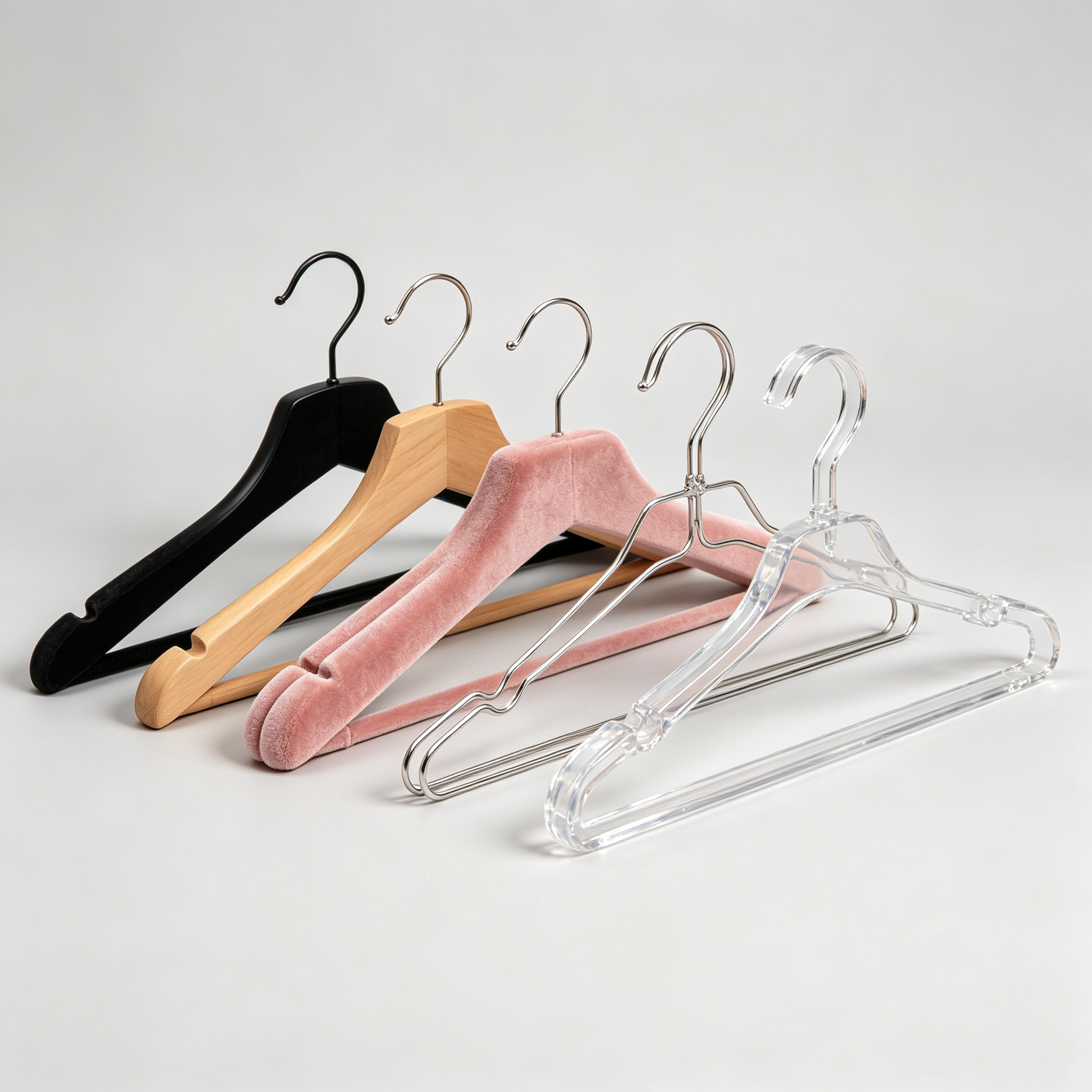
Walk into any retail store, hotel closet, or boutique display and you’ll see them — hangers. But not all hangers are created equal. The type of hanger you choose directly affects how your garments look on the rack, how long they last, and even how customers perceive your brand.
With over 20 years of manufacturing experience, we’ve seen every type of hanger material, design, and use case imaginable. This guide breaks down every major clothes hanger type by material, covering pros, cons, load capacity, ideal applications, and what to look for when sourcing in bulk. Whether you’re outfitting a 500-room hotel, a boutique fashion chain, or a mass-market retail concept, you’ll find the right hanger type here.
Why Choosing the Right Hanger Type Matters
Before diving into specific materials, it’s worth understanding why this decision is more important than most buyers realize.
Garment protection. A cheap wire hanger can stretch out the shoulders of a $200 blazer in a single season. A non-slip velvet hanger keeps a silk dress in perfect shape for years. The wrong hanger type causes visible shoulder bumps, stretching, and creasing — damage that directly reduces sell-through rates and increases returns.
Brand perception. In retail, the hanger is part of the product presentation. Heavy wooden hangers signal luxury and quality. Color-matched plastic hangers create a clean, modern brand aesthetic. Mismatched, flimsy hangers cheapen even the most expensive merchandise.
Space efficiency. Hanger thickness directly impacts how many garments fit on a rack. Slim velvet hangers can increase rack capacity by up to 50% compared to bulky wooden hangers — a critical factor for small boutiques and dense retail floors.
Cost per use. A $0.10 wire hanger that breaks after 3 months costs more in the long run than a $0.50 plastic hanger that lasts 5 years. Durability matters, especially for high-turnover retail environments.
Operational consistency. For multi-location retailers and hotel chains, standardizing on one hanger type across all locations ensures visual consistency and simplifies reordering.
By Material: 8 Main Types of Clothes Hangers
1. Plastic Hangers
Plastic hangers are the workhorse of the retail and hospitality industries. Available in countless colors, shapes, and thicknesses, they offer the best balance of affordability, durability, and customization.
Construction: Injection-molded from polystyrene (PS), polypropylene (PP), or ABS plastic. Quality varies dramatically — thin PS hangers can snap under heavy coats, while thickened ABS or PP hangers support 5kg or more.
Pros:
- Lowest cost per unit for bulk orders
- Highly customizable in color, shape, and logo printing
- Water-resistant and easy to clean
- Wide range of thickness options (from slim 0.5cm to heavy-duty 2.5cm)
- Available with trouser bars, clips, notches, and non-slip strips
Cons:
- Cheap thin versions can break under heavy garments
- Can leave shoulder bumps on delicate knits if not properly shaped
- Lower perceived quality compared to wood or velvet
- Environmental concerns (though recycled plastic options exist)
Load capacity: 2–8kg depending on thickness and material grade
Best for: Mass-market retail, supermarkets, department stores, hotel closets, uniform rooms, budget-conscious chains
Sourcing tip: Always request material grade specifications. “Plastic” is not one material — PP is more flexible, HIPS is stiffer, ABS is premium. For heavy suits and coats, specify minimum 1.5cm thickness or a thickened 2.5cm profile. Explore our plastic hanger collection →
2. Velvet / Flocked Hangers
Velvet hangers (also called flocked hangers) feature a soft, fuzzy coating over a plastic or wooden base. The non-slip surface is their defining characteristic — garments simply don’t slide off.
Construction: A lightweight plastic or wooden core is coated with nylon flocking via an electrostatic process, creating a velvety texture. Quality is determined by flocking density (higher = softer and more durable) and adhesive quality (poor adhesive = shedding).
Pros:
- Exceptional non-slip performance — ideal for silk, satin, and slippery fabrics
- Ultra-slim profile (typically 0.5cm thick) maximizes closet/rack space
- Gentle on delicate fabrics, no shoulder bumps or creases
- Premium aesthetic available in rich colors (black, navy, blush, rose gold series)
- Popular with boutiques and fashion-forward retailers
Cons:
- Flocking can shed or wear off over time with heavy use
- Not ideal for very heavy garments (the slim base limits load capacity)
- Can leave lint on dark garments (especially lighter-colored velvet)
- Higher cost than basic plastic
- Moisture can degrade flocking adhesive over time
Load capacity: 2–5kg (limited by the slim core, not the flocking)
Best for: Boutiques, lingerie stores, formal wear shops, hotel suites, closets with limited space, delicate garment displays
Sourcing tip: Ask for flocking density specifications and request a sample to rub-test for shedding. Premium velvet hangers use 100% nylon flocking with a density of 600–800D. Avoid hangers with visible plastic showing through the flocking. Browse velvet and flocked hangers →
3. Wooden Hangers
Wooden hangers convey quality, durability, and timeless appeal. They’re the standard for luxury retail, high-end hotels, and tailored menswear.
Construction: Cut from solid wood (beech, lotus, cedar, or bamboo) and shaped, sanded, and finished with lacquer, varnish, or natural oil. Available in natural tones, dark walnut stains, white, black, and custom colors. Chrome or matte black metal hooks are standard.
Pros:
- Highest perceived quality and luxury aesthetic
- Excellent durability — can last 10+ years with proper care
- Wide shoulder designs preserve the shape of suits and coats
- Cedar wood naturally repels moths and absorbs odors
- Strong load capacity for heavy outerwear
- Premium branding options (laser engraving, metal nameplates)
Cons:
- Highest cost per unit (2–5x more than plastic)
- Bulky profile takes more rack space
- Can warp or crack in high-humidity environments
- Heavy to ship (increases freight cost)
- Lacquer finish can chip with rough handling
- Not all wood is equal — cheap pine or composite wood warps easily
Load capacity: 5–15kg depending on wood type and thickness
Best for: Luxury boutiques, menswear stores, suit shops, high-end hotels, resort properties, premium department store sections, outerwear displays
Sourcing tip: Specify solid wood (not MDF or particleboard with veneer). Beech and lotus wood are the industry standards for durability and finish quality. For cedar hangers, verify genuine cedar (not cedar-scented pine). Check hook attachment — premium hangers use a threaded insert, not a simple staple. See our wooden hanger range →
4. Metal / Wire Hangers
Metal hangers range from the classic thin wire dry cleaner hanger to heavy-duty chrome tubular hangers used in retail. They’re simple, functional, and inexpensive.
Construction: Thin wire hangers are formed from galvanized steel wire (12–16 gauge). Heavy-duty metal hangers use chrome-plated steel tubing with a smooth finish. Some feature non-slip coatings or rubber tips.
Pros:
- Extremely low cost (wire hangers are the cheapest option)
- Ultra-slim profile maximizes space
- Durable — metal doesn’t break like cheap plastic
- Recyclable and environmentally friendly
- Chrome tubular hangers have a modern, industrial aesthetic
- Water-resistant and rust-resistant (with proper coating)
Cons:
- Thin wire hangers cause severe shoulder bumps and stretching
- Can rust if coating is damaged
- No non-slip surface — garments slide off easily
- Low perceived quality — not suitable for premium retail
- Wire ends can snag delicate fabrics
- Not ideal for heavy garments (thin wire bends)
Load capacity: 1–3kg (thin wire); 5–10kg (heavy-duty tubular)
Best for: Dry cleaners, laundry facilities, storage rooms, budget retail, uniform storage, temporary displays. Heavy-duty tubular metal hangers work for modern retail concepts and kitchen/pot racks.
Sourcing tip: For retail use, avoid standard 13-gauge dry cleaner wire — specify 12-gauge minimum or upgrade to tubular chrome. For any garment-facing application, add rubber or PVC coating to prevent snags and slipping. View metal and wire hanger options →
5. Acrylic Hangers
Acrylic (perspex) hangers are the premium display choice for high-end retail, museum stores, and luxury brands. Their transparent, glass-like appearance puts the focus entirely on the garment.
Construction: Cut from cast or extruded acrylic sheet (typically 8–15mm thick), polished edges, and fitted with chrome or brass metal hooks. Available in clear, frosted, and tinted colors.
Pros:
- Ultra-premium, gallery-quality aesthetic
- Transparent design doesn’t compete with the garment visually
- Heavy and substantial feel conveys luxury
- Scratch-resistant with proper care
- Customizable in thickness, color tint, and shape
- Easy to clean and maintain
Cons:
- Most expensive hanger type (5–10x the cost of plastic)
- Can crack or chip if dropped (acrylic is brittle)
- Heavy — increases shipping costs
- Thick profile takes more rack space
- Can show scratches and dust more visibly than opaque materials
- Limited non-slip properties without added rubber strips
Load capacity: 3–8kg depending on thickness
Best for: Luxury boutiques, designer brand stores, museum gift shops, jewelry/accessory displays, high-end department store windows, bridal salons
Sourcing tip: Specify cast acrylic (not extruded) for superior clarity and scratch resistance. Edge polishing is critical — flame-polished edges have a premium finish, while saw-cut edges look cheap. Minimum 10mm thickness for garment hangers; 15mm for heavy outerwear displays. Explore acrylic hangers →
6. Rubber-Coated Hangers
Rubber-coated hangers combine a strong metal or plastic core with a soft rubber outer layer, offering excellent non-slip performance and a distinctive tactile feel.
Construction: A metal wire or plastic frame is dipped or coated in PVC, TPR, or silicone rubber. The coating creates a grippy surface that holds garments in place. Available in various colors and thicknesses.
Pros:
- Excellent non-slip grip — garments stay put even on smooth fabrics
- Soft coating prevents snags and scratches on delicate items
- Durable core (metal or hard plastic) supports heavier garments
- Modern, matte aesthetic available in on-trend colors
- Water-resistant — suitable for damp environments
- Good for items that traditionally slip: camisoles, strapless dresses, scarves
Cons:
- Rubber coating can peel or crack with age
- Can leave marks on very delicate fabrics (test first)
- Heavier than basic plastic or wire
- Limited premium branding options (logo printing on rubber is challenging)
- Some low-quality rubber has a strong chemical odor initially
- Coating can melt or deform in high heat
Load capacity: 3–7kg depending on core material
Best for: Lingerie stores, accessory shops, strapless/scarf displays, retail environments with slippery fabrics, laundry rooms, outdoor gear storage
Sourcing tip: Specify TPR (thermoplastic rubber) or food-grade silicone coating rather than cheap PVC — TPR is more durable, odor-free, and less likely to mark fabrics. Check coating adhesion by bending the hanger — quality coating flexes with the core without cracking. See rubber-coated hangers →
7. Pearl / Beaded Hangers
Pearl hangers feature decorative bead or pearl embellishments along the arms, adding a decorative, feminine touch. They’re popular for specific retail niches and gift markets.
Construction: A plastic or metal base hanger with strands of faux pearls, beads, or crystals threaded along the arms. Some designs feature fully beaded bodies. Available in white, ivory, pink, and multi-color pearl combinations.
Pros:
- Unique decorative aesthetic that stands out in retail displays
- Non-slip surface — beads create friction that holds garments
- Popular for bridal, lingerie, and gift retail
- Lightweight and affordable
- Instagram-friendly — performs well in social media product photography
- Can be used as a premium upsell or gift-with-purchase item
Cons:
- Decorative rather than functional — not for heavy garments
- Beads can come loose or break with rough handling
- Limited use cases — not suitable for general retail or menswear
- Can snag delicate fabrics on bead edges
- Lower durability compared to solid plastic or wood
- Niche appeal — not a universal hanger solution
Load capacity: 1–3kg (decorative use only)
Best for: Bridal shops, lingerie stores, accessory boutiques, gift shops, hotel spa robes, special event displays, social media product photography props
Sourcing tip: For retail use, ensure beads are securely glued or threaded on steel wire (not simply glued to plastic). Request a pull-test sample. For bridal use, ivory or white pearls with a smooth finish are standard; avoid cheap plastic pearls that look yellow under retail lighting. Browse pearl hanger designs →
8. Foam Tube Hangers
Foam tube hangers (also called foam-covered hangers) feature a soft foam padding over a wire or plastic core. They’re designed to be ultra-gentle on delicate fabrics.
Construction: A lightweight wire or plastic frame is covered with a cylindrical foam tube (typically NBR or EVA foam). The foam is soft, cushioned, and non-slip. Available in various colors, though black and white are most common.
Pros:
- Ultra-soft padding prevents creases and marks on delicate fabrics
- Non-slip surface holds slippery garments
- Lightweight and affordable
- Good for knits, sweaters, and items prone to shoulder bumps
- Foam can be easily cut or shaped for custom applications
- Gentle on vintage and delicate garments
Cons:
- Foam can tear, compress, or degrade over time
- Not suitable for heavy garments (foam compresses under weight)
- Foam can absorb moisture and odors
- Lower durability — may need replacement every 1–2 years
- Bulky foam profile takes more rack space
- Limited premium appearance — looks more utilitarian than luxury
Load capacity: 1–4kg (light to medium garments only)
Best for: Knitwear stores, vintage clothing shops, delicate garment storage, sample rooms, home closets, retail environments with sweater-heavy inventory
Sourcing tip: Specify NBR (nitrile butadiene rubber) foam rather than basic EPE foam — NBR is more durable, has better memory (doesn’t stay compressed), and resists moisture. Foam wall thickness of 5–8mm is standard; thinner foam wears through quickly. View foam tube hangers →
By Use Case: Which Hanger Type for Which Application?
Beyond material, the right hanger type depends heavily on your specific use case. Here’s how the major buyer segments typically choose:
Retail clothing stores. The most common choice is heavy-duty plastic hangers (1–2.5cm thick) for general merchandise, velvet hangers for delicate or slippery items, and wooden hangers for premium sections. Multi-location retailers often standardize on one plastic hanger type with color-coding by department.
Boutiques and fashion-forward stores. Velvet and flocked hangers dominate for their slim profile and non-slip performance. Acrylic hangers are used for feature displays and window presentations. Wooden hangers appear in tailored or premium sections.
Hotels and hospitality. Standard hotel rooms typically use basic plastic hangers with security rings (anti-theft design). Luxury hotels and resorts upgrade to wooden hangers for a premium feel. Hotel suites may use velvet hangers for a more residential aesthetic. All hotel hangers should be water-resistant and easy to clean.
Menswear and suit stores. Wide-shoulder wooden hangers are the gold standard for suits, as they preserve the garment’s shoulder structure. Heavy-duty plastic hangers with a 2.5cm thickened profile are a cost-effective alternative. Trouser bars or clips are essential for suit sets.
Lingerie and intimate apparel. Non-slip is critical. Velvet hangers, rubber-coated hangers, and foam tube hangers all work well. Pearl hangers are popular for decorative displays and gift packaging. Clips are essential for bra and panty sets.
Pet apparel stores. Pet hangers are smaller (typically 15–25cm wide) and designed for pet clothing. Plastic is the most common material for durability and affordability. See pet hangers →
Quick Comparison Table
| Matériau | Cost | Capacité de charge | Non-Slip | Garment Protection | Space Efficiency | Durability | Meilleur pour |
|---|---|---|---|---|---|---|---|
| Plastique | $ | 2–8kg | Medium (with strips) | Good | High | Good | Mass retail, hotels, general use |
| Velvet/Flocked | $$ | 2–5kg | Excellent | Excellent | Very High | Medium | Boutiques, delicate items, small spaces |
| Wooden | $$$ | 5–15kg | Low | Excellent | Low | Excellent | Luxury retail, suits, high-end hotels |
| Metal/Wire | $ | 1–10kg | Low | Poor | Very High | Good | Dry cleaners, storage, budget use |
| Acrylic | $$$$ | 3–8kg | Low | Good | Medium | Medium | Luxury boutiques, designer displays |
| Rubber-Coated | $$ | 3–7kg | Excellent | Good | Medium | Medium | Lingerie, accessories, slippery fabrics |
| Pearl/Beaded | $$ | 1–3kg | Good | Medium | Medium | Low | Bridal, lingerie, gift retail |
| Foam Tube | $ | 1–4kg | Good | Excellent | Medium | Low | Knitwear, vintage, delicate storage |
Frequently Asked Questions
What type of hanger is best for suits?
Wide-shoulder wooden hangers are the best choice for suits, as they support the garment’s shoulder structure and prevent deformation. For a more budget-friendly option, heavy-duty plastic hangers with a 2.5cm thickened profile and a trouser bar work well. Avoid thin wire or slim velvet hangers for suits — they don’t provide enough shoulder support.
Do velvet hangers really save space?
Yes. Standard velvet hangers are approximately 0.5cm thick, compared to 1.5–2.5cm for plastic and 2–4cm for wooden hangers. This means you can fit roughly 2–3x more velvet hangers in the same rack space. For small boutiques or dense retail floors, this space savings is significant.
What hangers do luxury hotels use?
Most luxury hotels use wooden hangers for their premium appearance and durability. Standard hotel rooms often use plastic hangers with security rings (anti-theft), while suites and penthouse rooms upgrade to wood or velvet. All hotel hangers should be water-resistant, easy to sanitize, and feature a security ring to prevent theft.
Can I get custom logos on any hanger type?
Custom logo printing is available on most hanger types, but the method varies by material. Plastic hangers support silk-screen printing and laser engraving. Wooden hangers support laser engraving and metal nameplate embossing. Velvet hangers can have logos on the metal hook or via a metal plate. Acrylic hangers support laser etching. Learn more about OEM/ODM custom options →
What is the minimum order quantity for custom hangers?
MOQ varies by material and customization level. Standard plastic hangers typically start at 500–3,000 pieces per style/color. Wooden hangers usually require 300–1,000 pieces. Velvet hangers start at 500–1,000 pieces. Custom colors and logo printing may increase the MOQ. Always confirm MOQ with your manufacturer before finalizing designs.
Conclusion: Choose the Right Hanger Type for Your Business
There is no single “best” hanger type — the right choice depends on your product mix, brand positioning, budget, and space constraints. A multi-brand retailer might use heavy-duty plastic for general merchandise, velvet for delicate items, and wood for premium sections. A boutique might standardize on velvet for consistency. A hotel chain might use plastic for standard rooms and wood for suites.
The most common mistake buyers make is choosing the cheapest option without considering cost per use. A $0.10 wire hanger that damages a $150 sweater is far more expensive than a $0.50 plastic hanger that protects the garment for years.
As a manufacturer with over 20 years of experience producing all hanger types, we recommend starting with a sample order. Test different materials in your actual retail or hotel environment, evaluate garment protection and durability over 30–60 days, and then commit to a bulk order.
Need help selecting the right hanger type for your business? Browse our full product catalog → or request a free quote and sample kit → — our team typically responds within 12 hours with customized recommendations based on your specific use case.