
Noticias
Tipos de perchas para ropa: La guía completa para tiendas, hoteles y marcas

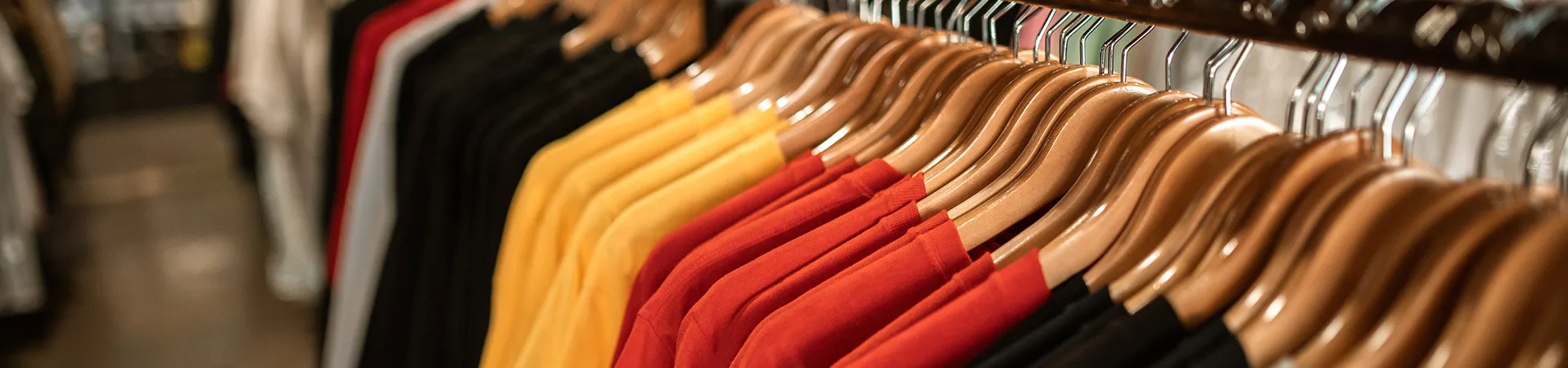
En cualquier tienda minorista, armario de hotel o exhibidor de boutique, los verás: colgadores. Pero no todos los colgadores son iguales. El tipo de colgador que elijas afecta directamente cómo se ven tus prendas en la estantería, cuánto duran y incluso cómo perciben los clientes tu marca.
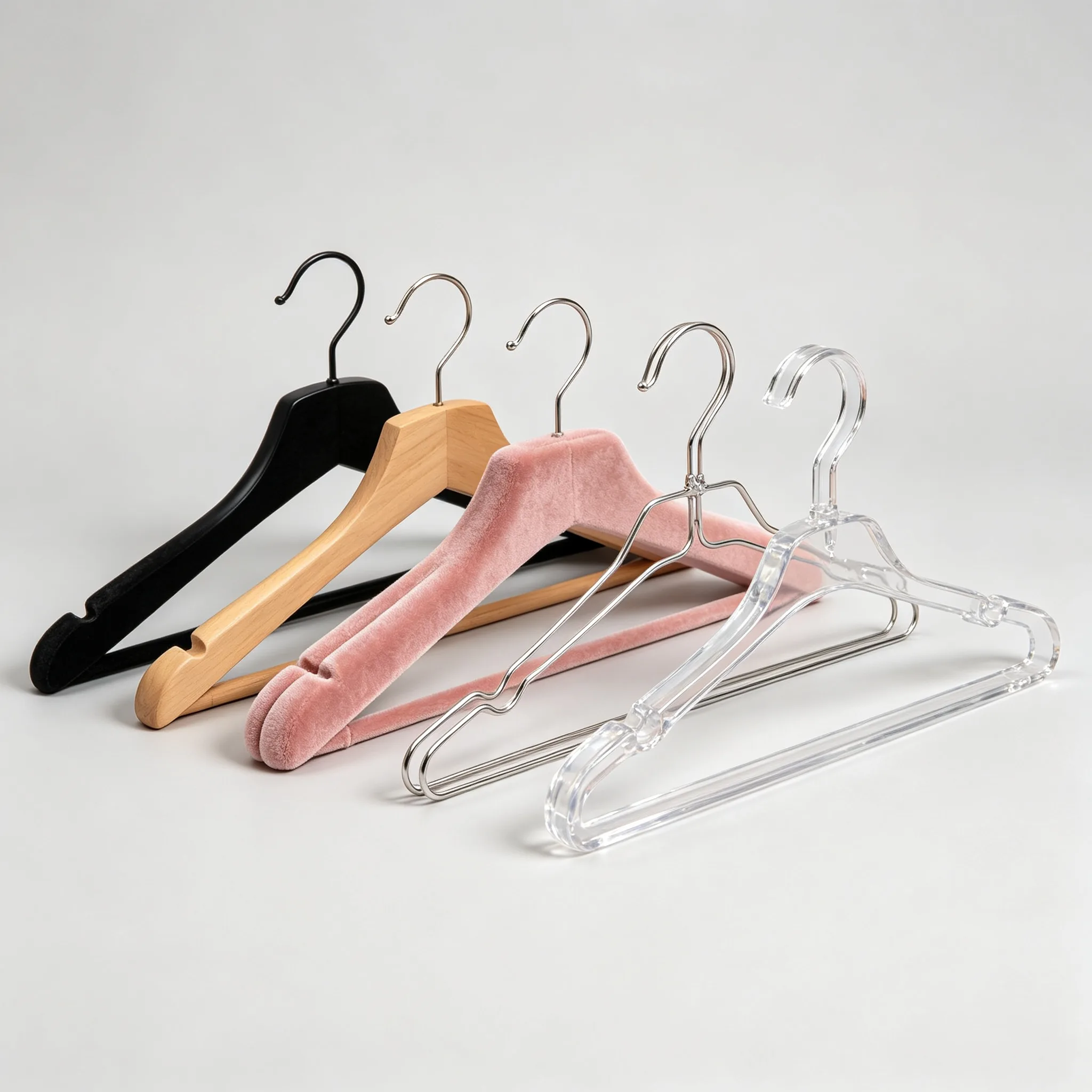
Con más de 20 años de experiencia en fabricación, hemos visto todo tipo de material, diseño y caso de uso de colgadores imaginable. Esta guía desglosa cada tipo principal de colgador de ropa por material, cubriendo ventajas, desventajas, capacidad de carga, aplicaciones ideales y qué buscar al comprar al por mayor. Ya sea que estés equipando un hotel de 500 habitaciones, una cadena de moda boutique o un concepto de venta minorista de mercado masivo, aquí encontrarás el tipo de colgador adecuado.
Por qué importa elegir el tipo de colgador correcto
Antes de profundizar en materiales específicos, vale la pena entender por qué esta decisión es más importante de lo que la mayoría de los compradores se dan cuenta.
Protección de prendas. Una percha de alambre barata puede estirar los hombros de un blazer $200 en una sola temporada. Una percha de terciopelo antideslizante mantiene un vestido de seda en perfecto estado durante años. El tipo de percha incorrecto causa bultos visibles en los hombros, estiramiento y arrugas — daños que reducen directamente las tasas de venta y aumentan las devoluciones. Aprende cómo prevenir los bultos en los hombros de la ropa con nuestra guía completa.
Percepción de marca. En el comercio minorista, la percha es parte de la presentación del producto. Las perchas de madera pesada transmiten lujo y calidad. Las perchas de plástico a juego con el color crean una estética de marca limpia y moderna. Las perchas desajustadas y endebles devalúan incluso la mercancía más cara.
Eficiencia del espacio. El grosor de la percha impacta directamente en cuántas prendas caben en una estantería. Las perchas de terciopelo delgado pueden aumentar la capacidad de la estantería hasta en un 50% en comparación con las perchas de madera voluminosas — un factor crítico para boutiques pequeñas y pisos de venta minorista densos.
Costo por uso. Una percha de alambre $0.10 que se rompe después de 3 meses cuesta más a largo plazo que una percha de plástico $0.50 que dura 5 años. La durabilidad importa, especialmente en entornos minoristas de alta rotación.
Consistencia operativa. Para minoristas con múltiples ubicaciones y cadenas hoteleras, estandarizar en un tipo de percha en todas las ubicaciones garantiza coherencia visual y simplifica los pedidos.
Por material: 8 tipos principales de colgadores de ropa
1. Colgadores de plástico
Las perchas de plástico son las más utilizadas en las industrias minorista y hotelera. Disponibles en innumerables colores, formas y grosores, ofrecen el mejor equilibrio entre asequibilidad, durabilidad y personalización.
Construcción: Colgado de poliestireno (PS), polipropileno (PP) o plástico ABS mediante moldeo por inyección. La calidad varía drásticamente — los colgadores delgados de PS pueden romperse con abrigos pesados, mientras que los colgadores de ABS o PP reforzados soportan 5 kg o más.
Pros:
- Costo más bajo por unidad en pedidos al por mayor
- Altamente personalizables en color, forma y impresión de logotipos
- Resistente al agua y fácil de limpiar
- Amplia gama de opciones de grosor (desde delgados de 0.5 cm hasta de uso pesado de 2.5 cm)
- Disponibles con barras para pantalones, clips, muescas y tiras antideslizantes
Contras:
- Las versiones baratas y delgadas pueden romperse bajo prendas pesadas
- Pueden dejar bultos en los hombros en tejidos delicados si no están bien moldeados
- Percepción de calidad inferior en comparación con la madera o el terciopelo
- Preocupaciones ambientales (aunque existen opciones de plástico reciclado)
Capacidad de carga: 2–8kg dependiendo del grosor y la calidad del material
Ideal para: Venta minorista de mercado masivo, supermercados, grandes almacenes, armarios de hotel, vestuarios de uniformes, cadenas con conciencia de presupuesto
Consejo de adquisición: Siempre solicite especificaciones de calidad del material. “Plástico” no es un solo material — el PP es más flexible, el HIPS es más rígido, el ABS es de alta gama. Para trajes y abrigos pesados, especifique un grosor mínimo de 1.5cm o un perfil engrosado de 2.5cm. Explora nuestra colección de perchas de plástico →
2. Colgadores de terciopelo / flocked
Las perchas de terciopelo (también llamadas perchas flocked) tienen un recubrimiento suave y peludo sobre una base de plástico o madera. La superficie antideslizante es su característica definitoria — las prendas simplemente no se deslizan.
Construcción: Un núcleo de plástico ligero o madera está recubierto con flocking de nylon mediante un proceso electrostático, creando una textura aterciopelada. La calidad se determina por la densidad del flocking (mayor = más suave y duradero) y la calidad del adhesivo (adhesivo deficiente = desprendimiento).
Pros:
- Rendimiento excepcionalmente antideslizante — ideal para seda, satén y tejidos resbaladizos
- Perfil ultrafino (típicamente de 0.5cm de grosor) que maximiza el espacio en armarios/racks
- Suave con tejidos delicados, sin bultos en los hombros ni arrugas
- Estética premium disponible en colores ricos (negro, azul marino, blush, serie oro rosa)
- Popular entre boutiques y minoristas a la moda
Contras:
- El flocking puede desprenderse o desgastarse con el tiempo con un uso intensivo
- No ideal para prendas muy pesadas (la base delgada limita la capacidad de carga)
- Puede dejar pelusa en prendas oscuras (especialmente en terciopelo de colores más claros)
- Costo más alto que el plástico básico
- La humedad puede degradar el adhesivo del flocking con el tiempo
Capacidad de carga: 2–5kg (limitado por el núcleo delgado, no por el flocking)
Ideal para: Boutiques, tiendas de lencería, tiendas de ropa formal, suites de hotel, armarios con espacio limitado, exhibiciones de prendas delicadas
Consejo de adquisición: Solicite especificaciones de densidad de flocking y pida una muestra para realizar una prueba de roce y verificar la caída de pelo. Los colgadores de terciopelo premium utilizan flocking de nylon 100% con una densidad de 600–800D. Evite colgadores con plástico visible a través del flocking. Explora colgadores de terciopelo y flocked →
3. Colgadores de madera
Los colgadores de madera transmiten calidad, durabilidad y un atractivo atemporal. Son el estándar para tiendas de lujo, hoteles de alta gama y ropa a medida para hombres.
Construcción: Cortados de madera maciza ( haya, lotus, cedro o bambú) y moldeados, lijados y acabados con laca, barniz o aceite natural. Disponibles en tonos naturales, tintes de nogal oscuro, blanco, negro y colores personalizados. Los ganchos de metal en cromo o negro mate son estándar.
Pros:
- Calidad percibida más alta y estética de lujo
- Excelente durabilidad — pueden durar más de 10 años con el cuidado adecuado
- Diseños con hombros anchos preservan la forma de trajes y abrigos
- La madera de cedro repele naturalmente las polillas y absorbe olores
- Alta capacidad de carga para prendas pesadas
- Opciones de marca premium (grabado láser, placas metálicas)
Contras:
- Costo por unidad más alto (2–5 veces más que el plástico)
- Perfil voluminoso que ocupa más espacio en la estantería
- Puede deformarse o agrietarse en ambientes con alta humedad
- Pesados para enviar (aumenta el costo de transporte)
- El acabado de laca puede astillarse con manejo brusco
- No toda la madera es igual — pino barato o madera compuesta se deforma fácilmente
Capacidad de carga: 5–15kg dependiendo del tipo y grosor de la madera
Ideal para: Boutiques de lujo, tiendas de ropa masculina, tiendas de trajes, hoteles de alta gama, propiedades en resorts, secciones de grandes almacenes premium, exhibiciones de ropa exterior
Consejo de adquisición: Especifique madera maciza (no MDF ni aglomerado con chapa). El haya y la madera de loto son los estándares de la industria para durabilidad y calidad de acabado. Para colgadores de cedro, verifique que sea cedro genuino (no pino con aroma a cedro). Verifique la fijación del gancho — los colgadores premium usan un inserto roscado, no un simple grapa. Vea nuestra gama de colgadores de madera →
4. Colgadores de metal / alambre
La gama de colgadores de metal va desde el clásico colgador delgado de alambre para tintorería hasta colgadores de tubo de cromo de alta resistencia utilizados en tiendas. Son simples, funcionales y económicos.
Construcción: Los colgadores de alambre delgados están hechos de alambre de acero galvanizado (de calibre 12 a 16). Los colgadores de metal de alta resistencia usan tubos de acero cromado con un acabado suave. Algunos tienen recubrimientos antideslizantes o puntas de goma.
Pros:
- Costo extremadamente bajo (los colgadores de alambre son la opción más barata)
- Perfil ultrafino que maximiza el espacio
- Duradero — el metal no se rompe como el plástico barato
- Reciclable y respetuoso con el medio ambiente
- Los colgadores de tubo de cromo tienen una estética moderna e industrial
- Resistente al agua y a la oxidación (con recubrimiento adecuado)
Contras:
- Los colgadores de alambre delgados causan golpes severos en los hombros y estiramiento
- Pueden oxidarse si el recubrimiento se daña
- Superficie antideslizante — las prendas se deslizan fácilmente
- Percepción de calidad baja — no apto para venta minorista premium
- Los extremos del alambre pueden enganchar telas delicadas
- No ideal para prendas pesadas (el alambre delgado se dobla)
Capacidad de carga: 1–3kg (alambre delgado); 5–10kg (tubular resistente)
Ideal para: Tintorerías, lavanderías, almacenes, comercio minorista económico, almacenamiento de uniformes, exhibiciones temporales. Los colgadores de metal tubular resistente funcionan para conceptos de venta minorista modernos y estanterías de cocina/olla.
Consejo de adquisición: Para uso en comercio minorista, evita el alambre de tintorería estándar de calibre 13 — especifica un mínimo de calibre 12 o actualiza a cromo tubular. Para cualquier aplicación que involucre prendas, añade recubrimiento de goma o PVC para prevenir enganches y deslizamientos. Ver opciones de colgadores de metal y alambre →
5. Colgadores de acrílico
Colgadores de acrílico (perspex) son la opción premium para exhibiciones en tiendas de alta gama, museos y marcas de lujo. Su apariencia transparente, similar al vidrio, centra toda la atención en la prenda.
Construcción: Cortados de lámina de acrílico fundido o extruido (normalmente de 8 a 15 mm de grosor), bordes pulidos y equipados con ganchos de metal de cromo o latón. Disponibles en colores transparentes, esmerilados y tintados.
Pros:
- Estética ultra premium, de calidad galería
- El diseño transparente no compite visualmente con la prenda
- Sensación pesada y sustancial que transmite lujo
- Resistente a arañazos con el cuidado adecuado
- Personalizable en grosor, tono de color y forma
- Fácil de limpiar y mantener
Contras:
- Tipo de colgador más caro (5–10 veces el costo del plástico)
- Puede agrietarse o astillarse si se cae (el acrílico es frágil)
- Pesado — aumenta los costes de envío
- El perfil grueso ocupa más espacio en la estantería
- Puede mostrar arañazos y polvo de manera más visible que los materiales opacos
- Propiedades antideslizantes limitadas sin tiras de goma añadidas
Capacidad de carga: 3–8kg dependiendo del grosor
Ideal para: Boutiques de lujo, tiendas de marcas de diseñador, tiendas de regalos en museos, exhibiciones de joyas/accesorios, escaparates de grandes almacenes de alta gama, salones de novias
Consejo de adquisición: Especifique acrílico fundido (no extruido) para una claridad superior y resistencia a los arañazos. El pulido de bordes es fundamental — los bordes pulidos con llama tienen un acabado premium, mientras que los bordes cortados con sierra parecen económicos. Grosor mínimo de 10 mm para colgadores de ropa; 15 mm para exhibiciones de prendas pesadas. Explora colgadores de acrílico →
6. Colgadores recubiertos de goma
Los colgadores recubiertos de goma combinan un núcleo de metal o plástico resistente con una capa exterior de goma suave, ofreciendo un excelente rendimiento antideslizante y una sensación táctil distintiva.
Construcción: Un marco de alambre metálico o plástico se sumerge o recubre en PVC, TPR o silicona de goma. El recubrimiento crea una superficie antideslizante que mantiene las prendas en su lugar. Disponible en varios colores y grosores.
Pros:
- Excelente agarre antideslizante — las prendas permanecen en su sitio incluso en tejidos lisos
- El recubrimiento suave previene enganches y arañazos en artículos delicados
- Núcleo duradero (metal o plástico duro) soporta prendas más pesadas
- Estética moderna y mate disponible en colores de tendencia
- Resistente al agua — adecuado para ambientes húmedos
- Ideal para artículos que tradicionalmente resbalan: camisolas, vestidos sin tirantes, bufandas
Contras:
- El recubrimiento de goma puede despegarse o agrietarse con el tiempo
- Puede dejar marcas en tejidos muy delicados (prueba primero)
- Más pesado que el plástico básico o el alambre
- Opciones limitadas de marca premium (la impresión de logotipos en goma es difícil)
- Algún caucho de baja calidad tiene un olor químico fuerte inicialmente
- El recubrimiento puede derretirse o deformarse con altas temperaturas
Capacidad de carga: 3–7 kg dependiendo del material del núcleo
Ideal para: Tiendas de lencería, tiendas de accesorios, exhibiciones sin tirantes/pañuelos, entornos minoristas con telas resbaladizas, lavanderías, almacenamiento de equipo para exteriores
Consejo de adquisición: Especifique recubrimiento de TPR (goma termoplástica) o silicona de grado alimentario en lugar de PVC barato — TPR es más duradero, sin olor y menos propenso a marcar las telas. Verifique la adherencia del recubrimiento doblando el colgador — un recubrimiento de calidad se flexiona con el núcleo sin agrietarse. Ver colgadores recubiertos de goma →
7. Colgadores de perlas / con cuentas
Los colgadores de perlas presentan adornos decorativos de cuentas o perlas a lo largo de los brazos, añadiendo un toque decorativo y femenino. Son populares en nichos minoristas específicos y mercados de regalos.
Construcción: Un colgador base de plástico o metal con hilos de perlas falsas, cuentas o cristales enhebrados a lo largo de los brazos. Algunos diseños presentan cuerpos completamente engastados con cuentas. Disponibles en combinaciones de perlas blancas, marfil, rosa y multicolores.
Pros:
- Estética decorativa única que destaca en exhibiciones minoristas
- Superficie antideslizante — las cuentas crean fricción que mantiene las prendas en su lugar
- Popular para retail de novias, lencería y regalos
- Ligero y asequible
- Apto para Instagram — funciona bien en fotografía de productos para redes sociales
- Puede usarse como una venta adicional premium o artículo de regalo con compra
Contras:
- Decorativo en lugar de funcional — no para prendas pesadas
- Las cuentas pueden soltarse o romperse con manejo brusco
- Casos de uso limitados — no apto para venta minorista general o ropa masculina
- Puede enganchar telas delicadas en los bordes de las cuentas
- Menor durabilidad en comparación con plástico sólido o madera
- Atractivo de nicho — no una solución universal para colgadores
Capacidad de carga: 1–3kg (solo para uso decorativo)
Ideal para: Tiendas de novias, tiendas de lencería, boutiques de accesorios, tiendas de regalos, batas de spa de hoteles, exhibiciones para eventos especiales, accesorios para fotografía de productos en redes sociales
Consejo de adquisición: Para uso en retail, asegúrese de que las cuentas estén pegadas o ensartadas de forma segura en alambre de acero (no simplemente pegadas al plástico). Solicite una muestra con prueba de tracción. Para uso en bodas, perlas blancas o marfil con acabado liso son estándar; evite perlas de plástico baratas que parecen amarillas bajo la iluminación de venta minorista. Explorar diseños de colgadores con perlas →
8. Colgadores de tubo de espuma
Los colgadores con tubo de espuma (también llamados colgadores cubiertos de espuma) tienen un acolchado de espuma suave sobre un núcleo de alambre o plástico. Están diseñados para ser ultra suaves con telas delicadas.
Construcción: Un marco ligero de alambre o plástico está cubierto con un tubo de espuma cilíndrico (normalmente espuma NBR o EVA). La espuma es suave, acolchada y antideslizante. Disponible en varios colores, aunque el negro y blanco son los más comunes.
Pros:
- El acolchado ultra suave previene arrugas y marcas en telas delicadas
- La superficie antideslizante mantiene prendas resbaladizas en su lugar
- Ligero y asequible
- Adecuado para tejidos, suéteres y prendas propensas a golpes en los hombros
- La espuma puede cortarse o moldearse fácilmente para aplicaciones personalizadas
- Suave con prendas vintage y delicadas
Contras:
- La espuma puede desgarrarse, comprimirse o deteriorarse con el tiempo
- No apto para prendas pesadas (la espuma se comprime bajo peso)
- La espuma puede absorber humedad y olores
- Menor durabilidad — puede necesitar reemplazo cada 1–2 años
- El perfil voluminoso de la espuma ocupa más espacio en el perchero
- Apariencia limitada de alta calidad — parece más utilitaria que de lujo
Capacidad de carga: 1–4kg (solo prendas ligeras a medianas)
Ideal para: Tiendas de punto, tiendas de ropa vintage, almacenamiento de prendas delicadas, salas de muestras, armarios domésticos, entornos minoristas con inventario centrado en suéteres
Consejo de adquisición: Especificar espuma NBR (goma de nitrilo butadieno) en lugar de espuma EPE básica — NBR es más duradera, tiene mejor memoria (no permanece comprimida) y resiste la humedad. El grosor de la pared de la espuma de 5–8mm es estándar; una espuma más delgada se desgasta rápidamente. Ver colgadores de tubo de espuma →
Por caso de uso: ¿Qué tipo de colgador para qué aplicación?
Más allá del material, el tipo de colgador adecuado depende en gran medida de tu caso de uso específico. Aquí cómo suelen elegir los principales segmentos de compradores:
Tiendas de ropa minorista. La opción más común son los colgadores de plástico de alta resistencia (de 1 a 2.5cm de grosor) para mercancía general, colgadores de terciopelo para artículos delicados o resbaladizos, y colgadores de madera para secciones premium. Los minoristas con varias ubicaciones a menudo estandarizan un tipo de colgador de plástico con codificación por colores según el departamento.
Boutiques y tiendas de moda. Los colgadores de terciopelo y flocked dominan por su perfil delgado y su rendimiento antideslizante. Los colgadores de acrílico se usan para exhibiciones destacadas y presentaciones en escaparates. Los colgadores de madera aparecen en secciones a medida o de alta gama.
Hoteles y hostelería. Las habitaciones de hotel estándar suelen usar colgadores de plástico básicos con anillos de seguridad (diseño antirrobo). Los hoteles y resorts de lujo mejoran a colgadores de madera para una sensación premium. Las suites de hotel pueden usar colgadores de terciopelo para una estética más residencial. Todos los colgadores de hotel deben ser resistentes al agua y fáciles de limpiar.
Ropa de hombre y tiendas de trajes. Los colgadores de madera de hombros anchos son el estándar de oro para trajes, ya que preservan la estructura del hombro de la prenda. Los colgadores de plástico de alta resistencia con un perfil engrosado de 2.5cm son una alternativa rentable. Las barras o clips para pantalones son esenciales para conjuntos de trajes. Para un desglose detallado de la los mejores percheros para trajes y abrigos, incluyendo recomendaciones de material y guías de tallas, lee nuestra guía de compra dedicada.
Lencería y ropa íntima. La antideslizante es fundamental. Colgadores de terciopelo, colgadores recubiertos de goma y colgadores de tubo de espuma funcionan muy bien. Los colgadores de perlas son populares para exhibiciones decorativas y embalaje de regalos. Los clips son esenciales para conjuntos de sujetador y bragas.
Tiendas de ropa para mascotas. Los colgadores para mascotas son más pequeños (normalmente de 15 a 25 cm de ancho) y están diseñados para ropa de mascotas. El plástico es el material más común por durabilidad y asequibilidad. Ver colgadores para mascotas →
¿Comparando los dos materiales de colgadores más populares? Nuestro perchas de terciopelo vs plásticas guía desglosa los pros, contras y mejores casos de uso para cada material en detalle.
Tabla comparativa rápida
| Material | Costo | Capacidad de carga | Antideslizante | Protección de prendas | Eficiencia en el espacio | Durabilidad | Mejor para |
|---|---|---|---|---|---|---|---|
| Plástico | $ | 2–8kg | Medio (con tiras) | Bueno | Alto | Bueno | Venta minorista, hoteles, uso general |
| Terciopelo/Con felpa | $$ | 2–5kg | Excelente | Excelente | Muy alto | Medio | Boutiques, artículos delicados, espacios pequeños |
| Madera | $$$ | 5–15kg | Bajo | Excelente | Bajo | Excelente | Venta minorista de lujo, trajes, hoteles de alta gama |
| Metal/Alambre | $ | 1–10kg | Bajo | Pobre | Muy alto | Bueno | Tintorerías, almacenamiento, uso económico |
| Acrílico | $$$$ | 3–8kg | Bajo | Bueno | Medio | Medio | Boutiques de lujo, exhibiciones de diseñadores |
| Recubierto de goma | $$ | 3–7kg | Excelente | Bueno | Medio | Medio | Lencería, accesorios, telas resbaladizas |
| Perla/Cuentas | $$ | 1–3kg | Bueno | Medio | Medio | Bajo | Nupcial, lencería, venta minorista de regalos |
| Tubo de espuma | $ | 1–4kg | Bueno | Excelente | Medio | Bajo | Prendas de punto, vintage, almacenamiento delicado |
Preguntas Frecuentes
¿Qué tipo de colgador es mejor para trajes?
Los percheros de madera de hombro ancho son la mejor opción para trajes, ya que soportan la estructura del hombro de la prenda y evitan deformaciones. Para una opción más económica, los percheros de plástico resistente con un perfil engrosado de 2.5cm y una barra para pantalones funcionan bien. Evita los percheros delgados de alambre o de terciopelo estrechos para trajes — no proporcionan suficiente soporte en los hombros.
¿Realmente ahorran espacio los colgadores de terciopelo?
Sí. Los percheros de terciopelo estándar tienen aproximadamente 0.5cm de grosor, en comparación con 1.5–2.5cm de los de plástico y 2–4cm de los de madera. Esto significa que puedes colocar aproximadamente 2–3 veces más percheros de terciopelo en el mismo espacio de estantería. Para boutiques pequeñas o pisos de venta densos, este ahorro de espacio es significativo.
¿Qué perchas usan los hoteles de lujo?
La mayoría de los hoteles de lujo usan percheros de madera por su apariencia premium y durabilidad. Las habitaciones estándar suelen usar percheros de plástico con anillos de seguridad (antirrobo), mientras que las suites y áticos optan por madera o terciopelo. Todos los percheros de hotel deben ser resistentes al agua, fáciles de desinfectar y contar con un anillo de seguridad para prevenir robos.
¿Puedo obtener logotipos personalizados en cualquier tipo de percha?
La impresión de logotipos personalizados está disponible en la mayoría de los tipos de percheros, pero el método varía según el material. Los percheros de plástico soportan impresión en serigrafía y grabado láser. Los de madera soportan grabado láser y embosado en placa metálica. Los percheros de terciopelo pueden tener logotipos en el gancho metálico o mediante una placa metálica. Los percheros de acrílico soportan grabado láser. Aprende más sobre opciones personalizadas OEM/ODM →
¿Cuál es la cantidad mínima de pedido para perchas personalizadas?
El MOQ varía según el material y el nivel de personalización. Los percheros de plástico estándar suelen comenzar en 500–3,000 piezas por estilo/color. Los de madera generalmente requieren de 300 a 1,000 piezas. Los percheros de terciopelo comienzan en 500–1,000 piezas. Los colores personalizados y la impresión de logotipos pueden aumentar el MOQ. Siempre confirma el MOQ con tu fabricante antes de finalizar los diseños.
Conclusión: Elige el tipo de percha adecuado para tu negocio
No existe un tipo de perchero “mejor” único — la elección correcta depende de tu variedad de productos, posicionamiento de marca, presupuesto y restricciones de espacio. Un minorista multimarca podría usar plástico resistente para mercancía general, terciopelo para artículos delicados y madera para secciones premium. Una boutique podría estandarizar en terciopelo para la coherencia. Una cadena hotelera podría usar plástico para habitaciones estándar y madera para suites.
El error más común que cometen los compradores es elegir la opción más barata sin considerar el costo por uso. Un perchero de alambre $0.10 que daña un suéter $150 es mucho más caro que un perchero de plástico $0.50 que protege la prenda durante años.
Como fabricante con más de 20 años de experiencia produciendo todo tipo de perchas, recomendamos comenzar con un pedido de muestra. Prueba diferentes materiales en tu entorno minorista u hotelero real, evalúa la protección de la prenda y la durabilidad durante 30–60 días, y luego realiza un pedido en volumen.
¿Necesitas ayuda para seleccionar el tipo de percha adecuado para tu negocio? Explora nuestro catálogo completo de productos → or solicita una cotización gratuita y un kit de muestras → — nuestro equipo generalmente responde en 12 horas con recomendaciones personalizadas basadas en tu caso de uso específico.
2 comentarios sobre “Types of Clothes Hangers: The Complete Guide for Retail, Hotels & Brands”