
Notizie
Best Hangers for Retail Stores: The Complete Buying Guide for Boutiques

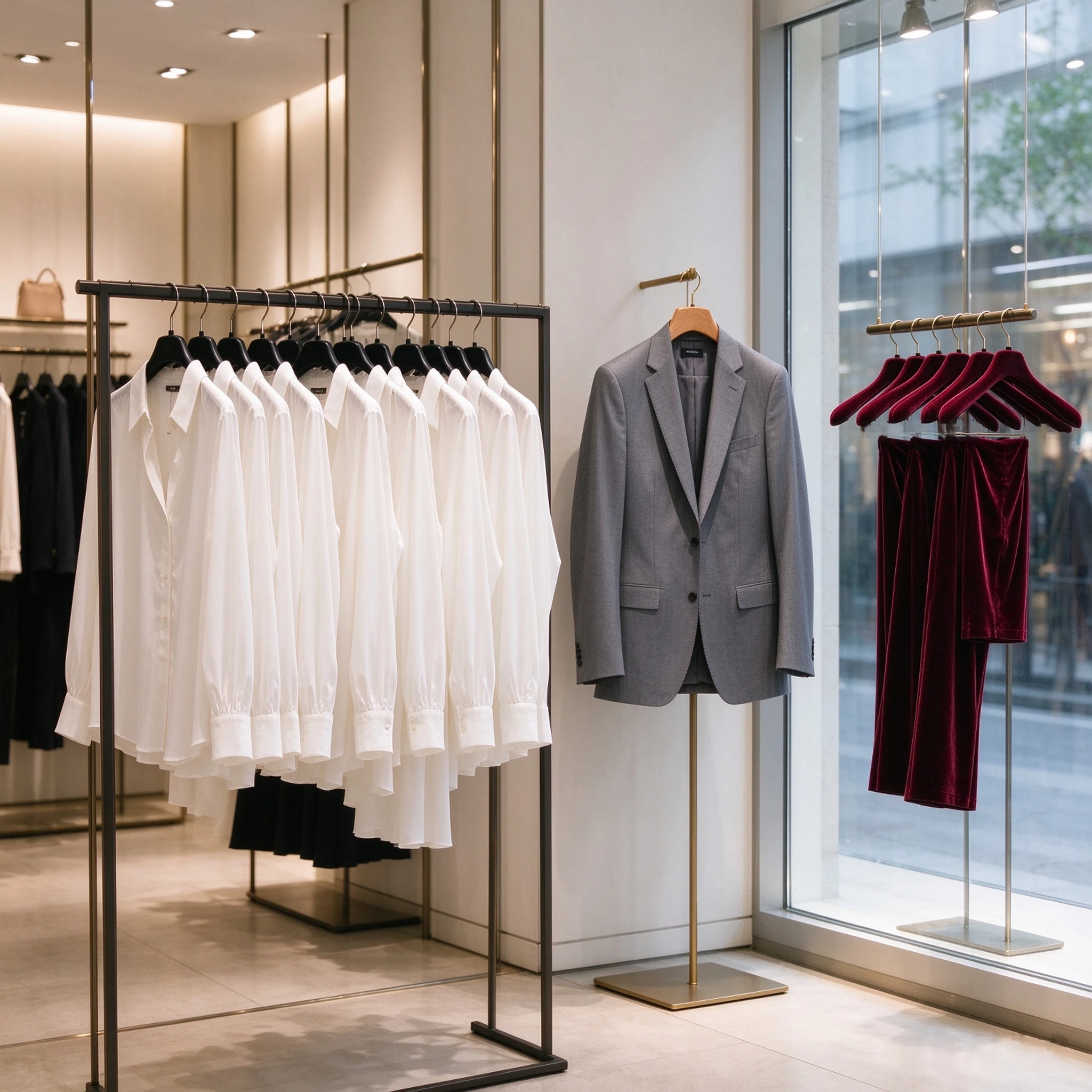
The hangers you choose for your retail store say more about your business than almost any other fixture. Walk into any successful clothing store and you will notice it immediately: the hangers match the brand, the garments sit correctly, the rails look full and organized, and nothing distracts from the merchandise. The hanger is the invisible frame around every garment you sell — and choosing the wrong ones quietly costs you sales, damages stock, and undermines your brand image. In this complete guide, we walk through how to choose the best hangers for retail stores: which materials work for which garments, how to coordinate hangers across your store zones, how to budget and calculate quantities, and how to source quality hangers at wholesale prices. For a broader overview of every hanger type, start with our complete guide to tipi di grucce per vestiti.
Indice
Why Hangers Matter More Than You Think
Retail merchandising experts know that the presentation layer around a garment shapes purchase decisions. The hanger is the first thing a customer sees when they look at a rack, and it frames the garment’s perceived quality. Consider these effects:
- Perceived value. The same dress looks premium on a velvet hanger and ordinary on a mismatched wire hanger. Customers judge product quality before they touch the fabric — and the hanger is a large part of that first impression.
- Garment condition. The right hanger preserves the garment’s shape, prevents shoulder bumps, and stops garments from slipping or stretching. Damaged-looking stock does not sell — and every damaged garment is money lost.
- Store coherence. A store with mismatched, broken, or generic hangers looks disorganized. A store with coordinated hangers across every rail looks professional, intentional, and premium. This coherence directly affects how customers feel about your prices.
- Brand reinforcement. Branded hangers with your logo travel into customers’ homes — a permanent reminder of your store that generic hangers can never provide.
- Staff efficiency. Standardized hangers make stocking, counting, and inventory faster, and consistent sizing reduces garment damage during handling.
Core Factors in Choosing Retail Hangers
Before selecting specific hangers, decide your approach across five core factors:
- 1. Brand positioning. A fast-fashion retailer needs durable, cost-effective plastic hangers; a luxury boutique needs wooden or velvet hangers that signal premium quality. Define what your brand should say before you choose materials.
- 2. Garment mix. Analyze what you actually sell: heavy coats, light blouses, tailored suits, delicate dresses? Each garment type has an ideal hanger — a one-size-fits-all hanger policy inevitably damages some garments.
- 3. Display density. How many garments per rail? Slimmer hangers (plastic, wire) allow more pieces per meter; bulky hangers (wooden, wide-shoulder) display fewer but better. Match hanger profile to your merchandising density targets.
- 4. Color coordination. In-store hanger color should complement — not fight — your merchandise and interior. Black is the safest premium choice; clear/white suits bright minimal displays; brand-matched colors reinforce identity.
- 5. Budget per hanger. Retail hangers range from a few cents (standard plastic) to several dollars (engraved wood). Set a realistic budget per garment and prioritize where premium hangers matter most (window, hero products).
Best Hangers by Garment Type
Different garments place different demands on a hanger. Here is the professional guideline for each category:
Shirts and Blouses
Standard plastic hangers (38-40cm) with smooth, rounded shoulders are ideal for shirts and blouses. They are lightweight, affordable, and space-efficient for dense displays. For silk or satin blouses, choose non-slip or velvet-coated hangers so garments do not slide. Our appendini per vestiti in plastica all'ingrosso are a workhorse choice for everyday shirts and tops.
Suits, Jackets and Coats
Tailored garments need wide-shoulder hangers that support the full shoulder line. Wooden wide-shoulder hangers (42-45cm) are the professional standard — they prevent shoulder bumps and preserve a jacket’s structure. For lighter jackets, wide-shoulder plastic hangers work well. See our guide to the best hangers for suits and coats and browse ganci in plastica con spalle larghe for economical jacket display.
Dresses and Skirts
Dresses hang best on hangers with notched shoulders that keep straps in place, or clip hangers for skirts. Velvet-covered hangers are the premium choice for delicate dresses — the fabric grips slippery straps and protects the garment. Pearl and decorative hangers add a boutique flourish for special collections. See our guide to appendini di perle for decorative dress display ideas.
Trousers and Pants
Trousers display best on clip hangers with rubber-padded clips that grip without marking fabric. For folded-over display, wide metal or plastic trouser bars work well. Quality clips prevent crease marks and fabric damage. Pair with suit hangers for complete two-piece displays.
Children’s Clothing
Children’s garments need smaller hangers (28-35cm) that fit the garment without stretching. Bright colors appeal to kids’ stores and family retailers; durable plastic is the economical choice. See our appendini di plastica per bambini all'ingrosso for children’s display racks.
Lingerie and Delicates
Lingerie and delicates require non-slip, fabric-friendly surfaces. PVC-coated wire hangers or velvet hangers prevent delicate straps from sliding; specialty hangers with notches and clips accommodate bras and camisoles. For premium lingerie departments, velvet is the standard.
Scarves and Accessories
Scarves, belts, and accessories benefit from specialty hangers with multiple hooks or rungs. Decorative options like pearl and beaded display hangers turn accessory walls into visual merchandising. Our pearl scarf and veil display hangers are a popular boutique accessory display solution.
Best Hangers by Store Zone
Different zones of your store play different roles — and they deserve different hanger strategies:
Window Display
The window is your hero presentation — invest in your best hangers here. Premium wooden hangers for tailored looks, velvet hangers for elegant garments, and branded hangers reinforce identity. Window garments are photographed, noticed, and judged more than anything else in the store.
Main Floor Display
The sales floor balances presentation with density and durability. Standardize on one coordinated hanger system — typically plastic in your brand color, or velvet for premium categories — so every rail looks intentional. Consistency matters more than per-hanger cost.
Fitting Rooms
Fitting rooms need sturdy, non-marking hangers that can handle the volume of try-ons. Durable plastic hangers with smooth surfaces are the practical standard — they survive constant handling and do not snag garments. Provide a mix of sizes so customers can try garments on properly.
Backroom and Stock
Back-of-house storage and stock rails prioritize cost and strength over appearance. Standard plastic hangers and wire hangers are the economical choice — they hold garments securely and stack densely. See our guide to wire and metal hangers for backroom solutions.
Retail Hanger Materials Compared
Each hanger material has a clear role in retail. Here is the practical breakdown:
Plastic Hangers for Retail
The retail workhorse: affordable, durable, lightweight, and available in every color. Best for high-density displays, fitting rooms, and backroom stock. ABS plastic offers premium rigidity at low cost. See our complete guide to appendini in plastica per vestiti for material grades and designs.
Wooden Hangers for Retail
The premium choice for suits, coats, and luxury departments. Wooden hangers carry weight, preserve garment structure, and project quality better than any other material. They are the standard in menswear and high-end boutiques. Our wooden pants hangers with logo are designed for branded clothing-store display. See the full guide to appendiabiti in legno.
Velvet Hangers for Retail
The fastest-growing retail choice: non-slip, fabric-friendly, and available in brand colors. Velvet hangers make every garment look premium and are ideal for delicate fabrics, dresses, and premium womenswear. See the comparison in appendini in velluto vs plastica.
Wire and Metal Hangers for Retail
Wire hangers serve backroom storage and shipping; coated wire hangers work on the floor for lingerie and accessories. They are economical and space-efficient but not ideal for premium floor display. See our guide to wire and metal hangers.
Pearl and Decorative Hangers for Retail
Pearl and beaded hangers turn display into decoration. They suit bridal sections, gift displays, children’s boutiques, and any area where the hanger itself is part of the visual merchandising. See our guide to appendini di perle for sizes and applications.
Quick Reference: Hanger Selection by Garment
For fast decision-making, here is the retail quick-reference table merchandisers use when setting up a new store or resetting a department:
| Garment Category | Gancio consigliato | Dimensione | Notes |
|---|---|---|---|
| Shirts / Blouses | Standard plastic | 38-40cm | Smooth rounded shoulders; velvet for silk/satin |
| Suits / Jackets | Wooden or wide-shoulder plastic | 42-45cm | Wide shoulder prevents bumps; trouser bar for 2-piece |
| Dresses | Notched or velvet hangers | 35-40cm | Notches keep straps in place; velvet for delicates |
| Trousers / Skirts | Appendiabiti a clip | 35-38cm | Rubber-padded clips prevent crease marks |
| Coats / Outerwear | Wooden heavy-duty | 45-50cm | Must support 5-8kg without flexing |
| Children’s | Small plastic / wooden | 28-35cm | Size match prevents stretching |
| Lingerie / Delicates | Velvet or PVC-coated | 30-35cm | Non-slip surface for straps and fine fabrics |
| Scarves / Accessories | Multi-hook / decorative | Any | Pearl and beaded options for visual merchandising |
Rule of thumb: if a garment looks strained, stretched, or out of shape on its hanger, the hanger is wrong for it. Walk your sales floor once a week and correct mismatches — the difference in how your merchandise photographs and sells is immediate.
Branded Hangers for Retail
For many retailers, branded hangers are the final step in a professional display strategy. Your logo printed, engraved, or debossed on a hanger turns every purchase into a walking advertisement. Customization is available across materials:
- Plastica: silk-screen or pad-printed logos, custom Pantone colors, embossed brand marks. Lowest MOQ — the entry point for most retailers.
- Wooden: laser-engraved logos, foil stamping, custom stains. The premium branded look for menswear and luxury.
- Velluto: printed or debossed logos in brand colors. Increasingly popular for premium womenswear.
- Wire: custom coatings and colors for high-volume programs.
Typical MOQ for logo printing is 1,000 pieces per design. For the full picture of custom hanger sourcing — costs, MOQs, lead times, and supplier selection — see our complete guide to custom clothes hangers (OEM/ODM) and example products like appendiabiti in plastica personalizzati.
How Many Hangers Do You Need, and What Budget?
Two questions every store owner asks: how many hangers do I need, and what should I budget? Here is the professional formula:
Quantity planning. Start with your total garment count on display. Multiply by 1.2-1.5 to cover fitting rooms, the back counter, damaged hangers, and seasonal turnover. For example, a store with 800 garments on display needs roughly 1,000-1,200 hangers. Break down by garment type to determine the hanger mix (e.g., 500 standard plastic, 200 wide-shoulder, 100 clip, 100 kids, 100 velvet, plus spares).
Budget planning. Allocate roughly 1-3% of your initial stock investment to hangers — a small price for protecting that stock and presenting it well. Prioritize spend where it matters: window and hero displays get premium hangers; backroom gets economical ones. A typical boutique opening with 800 garments budgets $800-$2,000 for a full hanger system, with per-unit costs from $0.05 (standard plastic) to $2+ (branded wood).
Consiglio per l'acquisto: Buy all hangers from one manufacturer to ensure consistent color, quality, and branding across the store. Consolidated ordering also unlocks volume pricing — see our sourcing guidance in the custom hangers guide.
Common Retail Hanger Mistakes
Avoid these mistakes that quietly cost retailers money and image:
- 1. One hanger for everything. Using a single hanger type for all garments damages suits (too narrow), stretches kids’ clothes (too wide), and fails delicates (no grip). Match hangers to garment types.
- 2. Ignoring color consistency. Mixed hanger colors from different suppliers make rails look messy and unprofessional. Standardize on one color system from one supplier.
- 3. Buying thin, cheap hangers. The cheapest hangers bend, break, and damage stock — false economy. Specify quality material (ABS plastic, adequate gauge) even on a budget.
- 4. Neglecting the fitting room. Fitting rooms with flimsy or worn hangers create a poor final impression at the moment of decision. Invest in sturdy, clean hangers there.
- 5. No spares. Broken hangers go unreplaced for weeks, leaving empty or messy rails. Order 15-20% spares and keep a small stock on hand.
- 6. Skipping branding. Even a simple printed logo hanger adds enormous brand value for a small marginal cost. Generic hangers are a missed branding opportunity.
Building Your Hanger System in Phases
If you are opening a new store or overhauling an existing one, you do not have to buy the entire system at once. A phased approach spreads the investment and lets you learn what works:
Phase 1 — Standardize the basics. Before anything else, replace mismatched hangers storewide with one coordinated standard: typically quality ABS plastic in your brand color for the main floor, plus sturdy hangers for fitting rooms. This single change transforms how the store looks overnight, at the lowest cost per hanger.
Phase 2 — Protect your investment pieces. Add the garment-specific hangers your mix requires: wide-shoulder hangers for suits and jackets, clip hangers for trousers and skirts, notched hangers for dresses, and small sizes for children’s clothing. This protects your most expensive stock and reduces damage claims.
Phase 3 — Upgrade the hero zones. Invest in premium hangers where they are seen and photographed: the window display, the hero rail at the store entrance, and premium departments. Wooden hangers for tailored looks, velvet for elegant womenswear, and decorative pearl hangers for gift and bridal sections.
Phase 4 — Add branding. Once your hanger system is stable, order logo-printed or engraved hangers for your best-selling categories. Start with a single design at the 1,000-piece MOQ, measure the brand response, and expand to more categories each season.
Working through these phases with a single manufacturer ensures every batch matches the previous one in color and quality — which is why consolidated, factory-direct sourcing is the professional standard. For the complete sourcing and MOQ picture, see our guide to custom clothes hangers (OEM/ODM).
Domande frequenti
Q: What type of hanger is best for a retail store?
A: There is no single best type — the right mix depends on your garments and brand. As a general system: standard plastic hangers for shirts and blouses, wide-shoulder hangers (wooden or plastic) for suits and jackets, clip hangers for trousers and skirts, velvet or non-slip hangers for delicates, and smaller hangers for children’s clothing. Coordinate colors across all types for a professional look.
Q: How many hangers does a clothing store need?
A: Multiply your display garment count by 1.2-1.5. A store displaying 800 garments typically needs 1,000-1,200 hangers, covering fitting rooms, back counter, and replacements. Break the total down by garment type to determine the right mix, and keep 15-20% spares on hand.
Q: Are wooden hangers worth it for retail?
A: For suits, coats, and premium departments — absolutely. Wooden hangers protect tailored garments and signal quality that justifies higher prices. For high-volume everyday garments, plastic is more cost-effective. Many successful stores use wooden hangers selectively: premium zones and hero products get wood; the rest uses coordinated plastic or velvet.
Q: Should I buy hangers with my logo on them?
A: Yes, if your order volume supports it. Logo-printed hangers cost a little more but travel into customers’ homes and keep advertising your store for years. MOQ for logo printing is typically 1,000 pieces per design. Start with your best-selling categories and expand from there.
Q: What is the best hanger material for delicate fabrics?
A: Velvet-covered hangers are the best choice for delicate fabrics — the soft, non-slip surface protects silk, satin, lace, and knitwear from snags and slippage. PVC-coated wire hangers are a good economical alternative. Avoid bare wire or rough plastic, which can snag fine loops and textures.
Q: How much do retail hangers cost in bulk?
A: Wholesale prices range from $0.03-$0.10 for standard plastic hangers, $0.10-$0.30 for quality ABS or velvet hangers, and $0.50-$2+ for wooden or branded hangers. Volume is the biggest pricing lever — consolidated orders from one manufacturer can cut unit cost by 20-40%. Request itemized quotes for accurate budgeting.
Q: Do hanger colors matter for retail display?
A: Yes. Coordinated hanger colors create a cohesive, professional display that makes merchandise look intentional and premium. Black is the safest premium neutral; clear and white suit bright minimal interiors; brand-matched colors reinforce identity. Mixed colors from different suppliers read as messy — standardize on one color system.
Q: Where should I buy retail hangers in bulk?
A: Buy factory-direct from a hanger manufacturer whenever possible. Factory-direct sourcing cuts out middleman margins (saving 15-30%), gives you control over material quality, and enables consistent color and branding across mixed hanger types. Look for a multi-material manufacturer so you can consolidate plastic, wooden, velvet, and wire hangers in one order. See our guide to custom clothes hangers (OEM/ODM) for supplier selection criteria.
Dress Your Store for Success
Your hangers are part of your store’s personality. They protect your stock, frame your merchandise, and carry your brand home with every sale. Choosing the right hanger system is not a detail — it is merchandising strategy. The good news: it is one of the most affordable upgrades a store can make, and the payoff shows immediately in how your merchandise looks and sells.
At HUIYAO, we have manufactured hangers for retail stores since 2002. We supply plastic, wooden, velvet, wire, and pearl hangers — all available in coordinated colors and with custom branding — so you can build a complete, consistent hanger system from one factory. We offer free samples, accept small trial orders, and deliver factory-direct wholesale pricing.
Ready to dress your store for success? R: Contattaci oggi per:
- Free hanger samples across materials (you pay shipping only)
- A hanger system recommendation based on your store’s garment mix
- Coordinated color and branding consultation
- Bulk wholesale pricing for your store or chain
Get a Free Retail Hanger Quote and Samples
Factory-direct pricing · Free samples · All materials & colors · Custom branding available
Per ulteriori guide all'acquisto di appendiabiti e approfondimenti del settore, esplora la nostra collezione completa di guide sugli appendiabiti.